 How-to
Can You Fish at Night in Alberta?
Quick Summary
Yes, you can fish at night in Alberta, but it depends on the waterbody, the season and the type of fishing. Some named waters carry time-of-day limits in the sportfishing rules, so check the current regulations for your exact location before you go.
- Some named Alberta waters have time-of-day restrictions, while others allow fishing after dark.
- Restrictions are waterbody-specific, so a rule for one river does not apply to the lake next door.
- Check the official Alberta sportfishing regulations for the current hours and any special rules.
- Closures and advisories are separate from time-of-day rules, so check them before a night trip.
- Tell someone your location and return time, and carry a charged phone and backup light.
Table of Contents
- Can You Fish at Night in Alberta?
- How Alberta Time of Day Angling Restrictions Work
- Alberta Sportfishing Regulations: Where to Check the Rules
- Checking Closures and Advisories Before a Night Trip
- Night Fishing from Shore, Boat and Ice
- Night Fishing Gear, Safety and Species Beyond Walleye
- Planning Your Next River Outing with River People Guides
- Frequently Asked Questions
Can You Fish at Night in Alberta?
Last Updated: November 24, 2026
Yes, you can fish at night in Alberta, but the answer depends on the waterbody, the season and the type of fishing you plan. Some Alberta waters carry time-of-day limits under the sportfishing rules, while others allow angling after dark. Anglers often ask this question before a late-evening trip, so here is a clear overview of what to check first.
Many anglers assume that a general rule covers every river in the province. That is rarely the case. Some waters have special regulations, and those can change from one year to the next.
How Alberta Time of Day Angling Restrictions Work
Time-of-day angling restrictions limit when anglers may fish certain waters. They are set in the province's sportfishing regulations and usually apply to named waterbodies or specific locations rather than the whole province.
Some named waters carry time-of-day closures, so check the current regulations for the exact hours that apply to your water. The restriction is waterbody-specific, so the same clock does not apply on the lake or river next door. A common pattern is for the restriction to be attached to a named river or a defined section of it, and for the affected list to be revised between regulation years.
General sportfishing rules versus waterbody-specific limits
Alberta's general sportfishing rules cover most open waters. A waterbody-specific limit can override those general rules for a single river or lake.
- General rules: Apply broadly across the province unless a waterbody is listed otherwise.
- Waterbody-specific limits: Can restrict fishing hours, gear, or species on named waters.
- Special regulations: May apply in certain seasons or to certain sections of a river.
Always check the specific water you plan to fish. A rule for one river does not automatically apply to the lake beside it.
Waters with time-of-day restrictions
Some waters carry time-of-day restrictions, and the list can change. Rather than rely on a secondhand list, confirm the status of your exact location in the current regulations before you head out.
- Look for named rivers and lakes with posted hour limits.
- Note any section-specific rules within a larger river system, since a restriction can start or stop at a named bridge, confluence, or boundary.
- Confirm whether restrictions change by season or by regulation year.
Because the list is updated, check the official source the day you go. If you cannot find your waterbody on the restricted list, that is a signal it falls under the general rules, not proof that no other closure applies.
Watch out: a waterbody can be absent from the time-of-day list and still be closed by an in-season advisory or correction, so the restriction check and the closure check are two separate steps.
Alberta Sportfishing Regulations: Where to Check the Rules
The most reliable place to check current rules is the official sportfishing regulations published by the Government of Alberta (Alberta Sportfishing Regulations).
Here is a quick way to check:
| Check Item | What to Look For | Why It Matters |
|---|---|---|
| General rules | Statewide or province-wide hours | Sets the baseline |
| Waterbody list | Named lakes and rivers | Catches exceptions |
| Special regulations | Seasonal or section limits | Changes the answer |
| Current date | Latest update or correction | Avoids outdated rules |
Save the exact regulation page you used. If a warden asks, you can show your source.
Checking Closures and Advisories Before a Night Trip
Closures and advisories can override normal fishing rules. A river can close for flood conditions, fish health concerns, or construction, even when the regulations say it is open.
Before a night trip, check three things:
- Current closures for your specific waterbody
- Active advisories about fish health or water conditions
- Any notices about access or safety on the river
A quick check before you leave can save a long drive home.
Night Fishing from Shore, Boat and Ice
Night fishing works from several setups, but each one has different rules to follow. Shore fishing is the simplest to start with, since you stay on land and can leave quickly.
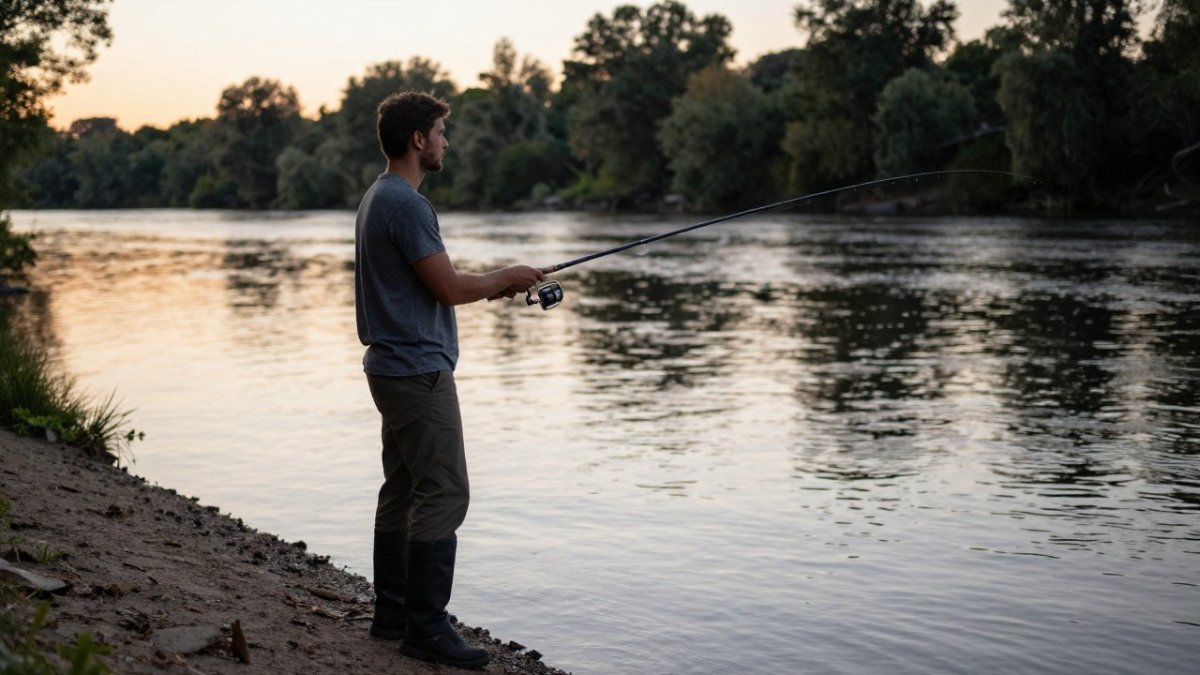
Boat fishing after dark adds navigation concerns. Carry working lights and know the river channel before you go. Ice fishing at night is common in winter, but ice conditions can change fast, so check local ice reports before you walk out.
- Shore: Easiest setup, limited by access and footing
- Boat: Needs lights, safety gear and route knowledge
- Ice: Requires current ice-thickness checks and a plan for daylight-length risks
Night Fishing Gear, Safety and Species Beyond Walleye
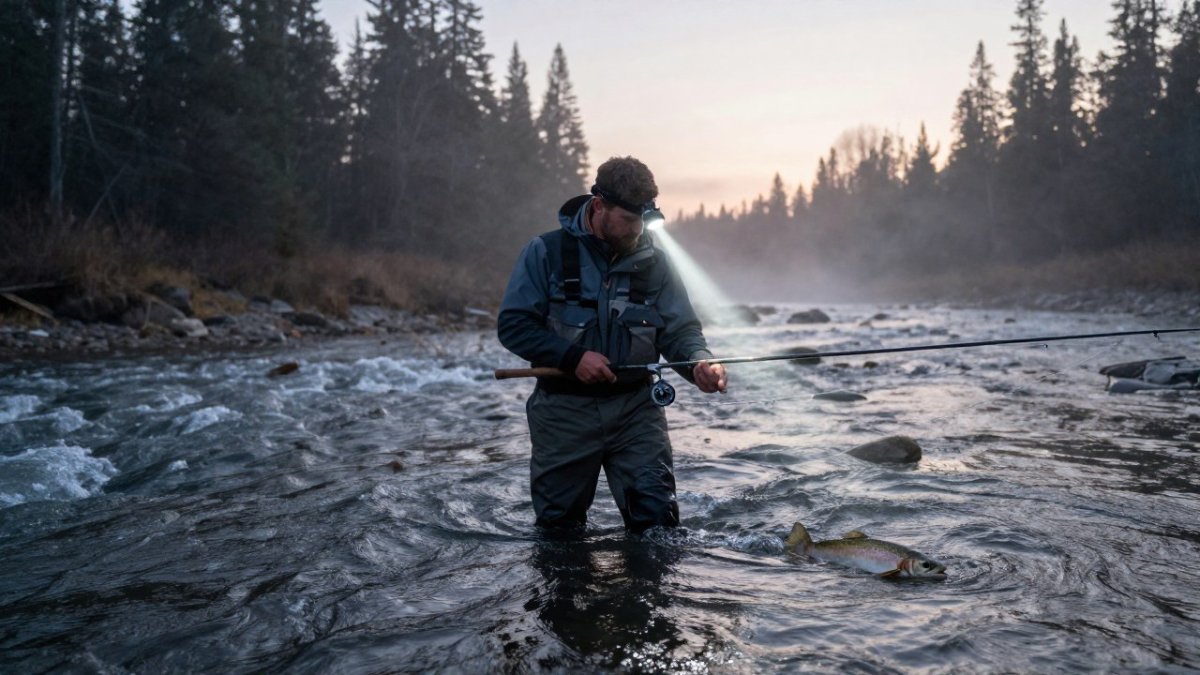
Night fishing gear should focus on visibility, warmth, and keeping your hands free. A headlamp with a red-light setting can help you tie knots and change flies while keeping your night vision, and a spare light in a pocket is a sensible backup. Confirm that any lights or illuminated floats you plan to use are permitted on your water before you rig them, since gear rules can be waterbody-specific. Pack extra layers, because evenings cool quickly even in summer, and keep a dry bag for a phone and a backup battery.
Walleye get most of the attention for night angling, but other species may also be active after dark. Always confirm the rules for the specific species on your chosen water, including any size or retention limits that apply after dark.
Here are a few safety basics:
- Tell someone your location and return time
- Carry a charged phone and a backup light
- Wear a properly fitted life jacket on any boat or moving water
- Keep a clear exit route from the riverbank
- Pre-scout your access and landing spot in daylight so you are not finding the bank by feel
Boat navigation after dark carries extra risk, so know the channel, carry working lights, and slow down before you reach an unfamiliar stretch.
For a quick reference on staying warm and safe when conditions turn cold, see our guide on Winter Fly Fishing: Strategies to Stay Sharp When Water Turns Cold. A parent or group heading out after dark can also review the Family Fly Fishing Safety in Alberta: A Parent's Guide before the trip, and the question of how do you stay safe fly fishing on Alberta rivers? covers the hazards to plan around when visibility is poor.
Planning Your Next River Outing with River People Guides
A good night outing starts with a plan. Check the regulations, confirm closures, pack for the temperature drop and tell someone where you are going. Then decide whether you want to fish on your own or with a guide.
River People Guides offers guided river trips for anglers of all skill levels. A guided trip can give you local knowledge of which stretches are open and where fish feed. Before you head out, review the What to Pack for a River Fishing Trip: Complete Guide so nothing gets forgotten. Anglers ready to get on the water can also book a guided trip.
Book a trip with River People Guides and check the current rules with our team before you fish after dark.
Frequently Asked Questions
Can you fish at night in Alberta?
In most of Alberta, fishing after dark is allowed under general sportfishing rules, but some specified lakes and rivers carry time-of-day restrictions that close them at set hours, . Whether night fishing is legal depends on the exact waterbody and sometimes the species, so the scope of the rule matters. Before heading out after sunset, check the current Alberta sportfishing regulations and any location-specific notices for the water you plan to fish.
How do I check whether a lake or river has time-of-day fishing restrictions?
Start with the current Alberta sportfishing regulations published by the Government of Alberta, then look up the specific waterbody in the location-specific rules section. Look for restrictions tied to the lake or river name, the species and any dates. Also check current advisories and closures, since a notice can change access or hours for a short period. If the rule for your water is unclear, confirm it before you fish rather than assuming general rules apply.
Can you fish for walleye at night in Alberta?
Walleye are one of the most popular species for night angling, but whether you can fish for them after dark depends on the waterbody and the regulations in force that season. Some waters carry time-of-day restrictions that apply to all fishing, while others follow general rules. Check the specific lake or river before planning a night trip for walleye, and treat species-specific limits as separate from the time-of-day rules.
Do fishing closures or advisories affect night fishing?
Yes. A closure or advisory can restrict access to a waterbody or change the rules that apply to it, and that can include night fishing. Advisories are often posted for fish consumption or water conditions rather than hours, so read the notice carefully. Check for current closures and advisories for your waterbody immediately before you go, because conditions can change without much warning.