 ultimate-guide
Family Fly Fishing Safety in Alberta: A Parent's Guide
Last Updated: November 4, 2026
Quick Summary
Family-friendly fly fishing safety in Alberta starts with choosing slow, gravel-bottomed water with easy bank access, then setting firm rules for wading depth, life jacket fit, and retreat before anyone enters the river. Children under about six should fish from the bank, while older kids wade only in knee-deep water with an adult within arm's reach.
- Choose a slow, wide river section with a gravel bottom and gentle banks.
- Children under about six should not wade in moving water at all.
- Children aged six to ten may wade only in water below the knee.
- Every child wears a properly fitted life jacket near moving water, with fit checked before each trip.
- Leave the water immediately if shivering, slurred speech, or unusual quietness appears.
Table of Contents
- Choosing a Family-Friendly Fly Fishing Site in Alberta
- Alberta Sportfishing Regulations for Youth
- River Wading Safety Tips for Children
- Essential Fly Fishing Gear for Kids
- Weather, Sun, Hydration and Emergency Planning in Alberta
- Booking Your First Family Trip with River People Guides
- Frequently Asked Questions
Taking a child fly fishing on an Alberta river is one of the best ways to introduce them to the outdoors, but it carries hazards that a regular family day at the lake does not.
Fly fishing adds its own risks. Long rods, backcasts that can reach a child standing behind you, hooks, and slippery rocks all matter more when a young angler is learning to cast.
The most common mistake we hear about is treating the outing like a casual picnic.
Keep the plan simple enough to remember.
Choosing a Family-Friendly Fly Fishing Site in Alberta
Site selection does more for family safety than any piece of gear.
Before choosing a spot, check the river's flow and recent conditions. Provincial river reports and local fly shops can tell you whether water levels are high or dropping. A river that is safe on Monday can be dangerous by Thursday after a storm upstream.
We recommend picking a spot you can leave quickly. Parking close to the water, a short walk back to the car, and a known bailout route all make a difference if a child gets cold, tired or upset. Avoid sites where the only exit involves crossing the river.
Alberta Sportfishing Regulations for Youth
Alberta's sportfishing rules apply to children as well as adults, and the details vary by water body, species and season (Alberta Sportfishing Regulations). Confirm the current licence requirements for young anglers with the provincial authority before your trip. Where you fish matters too, because some rivers have special restrictions, bait rules or catch limits.
Read the current regulations for the specific water you plan to fish, not general guidance from a previous year. Pay attention to closed seasons, barbless hook requirements and catch-and-release rules, which are common on Alberta trout streams. Teaching children these rules early builds good habits and avoids accidental violations.
River Wading Safety Tips for Children
Wading is where most family fly fishing accidents happen, and the risk is not evenly distributed across ages. A four-year-old and a ten-year-old need different rules, different supervision, and different water. Tailoring the wading plan to the child's age and swimming ability matters more than any single piece of gear.
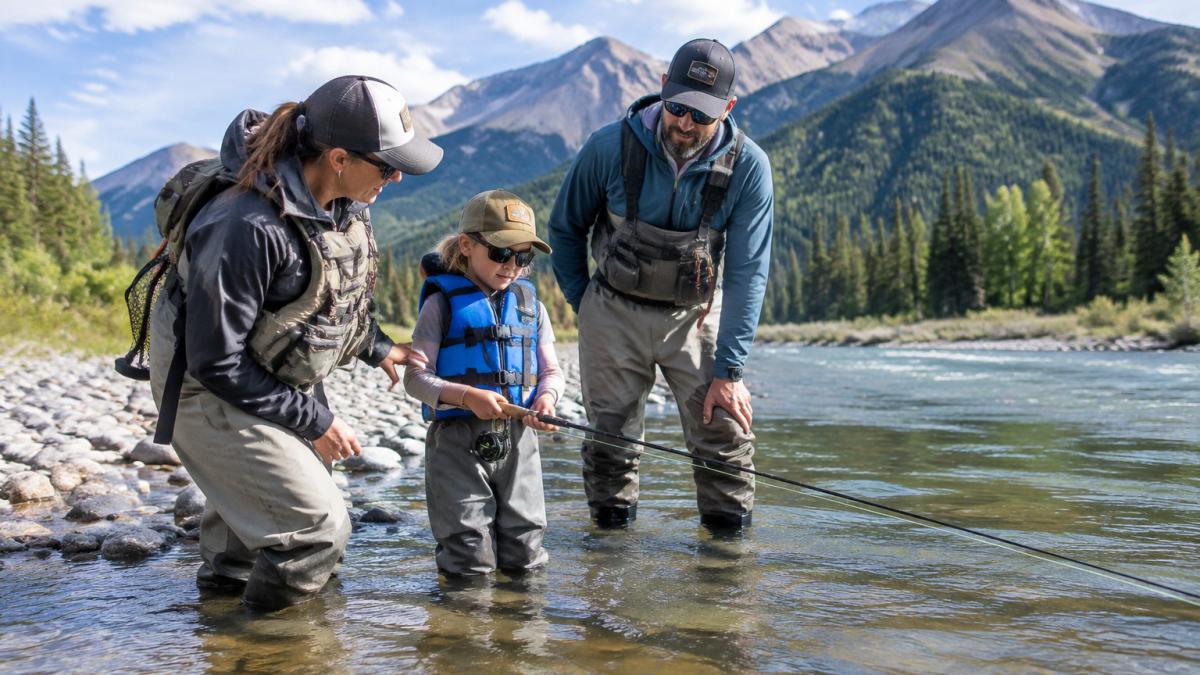
Age- and Ability-Based Wading Rules
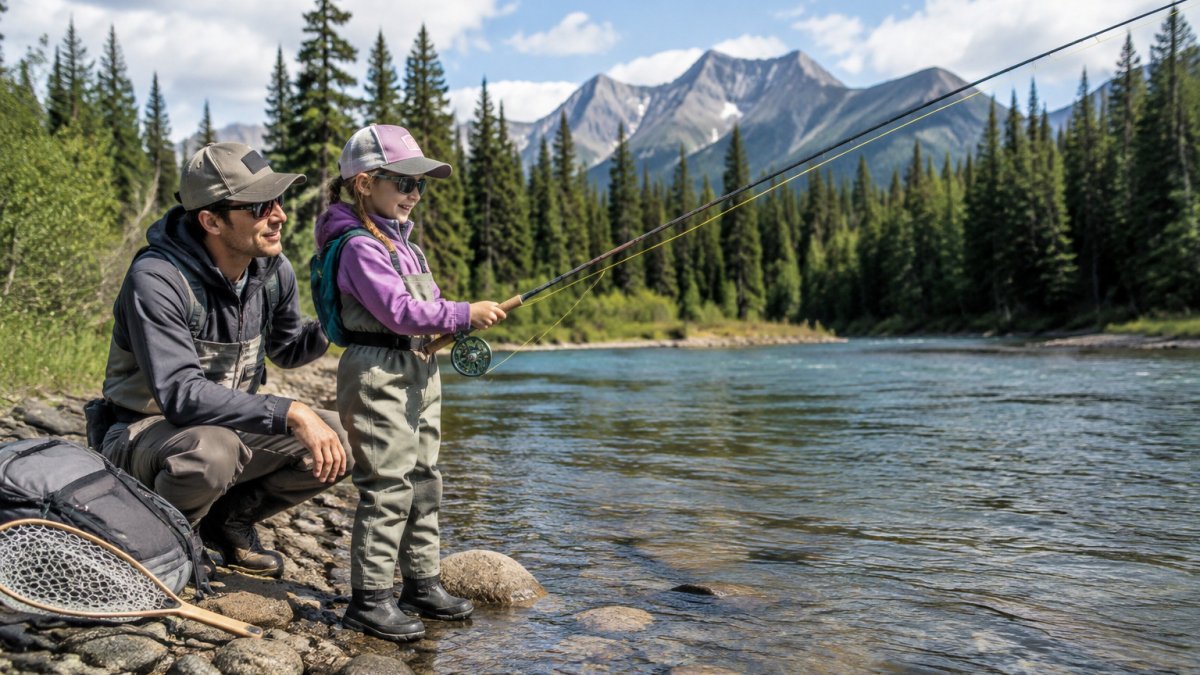
For children under about six, the safest approach is no wading in moving water at all. Fish from the bank, from a gravel bar, or from a stable log or rock the child can sit on with an adult within arm's reach.
For children roughly six to ten, allow wading only in water below the knee, only with an adult within arm's reach, and only on a gravel or sand bottom with no visible current push.
For older kids and beginners of any age, the knee rule still applies until you have watched them stand and move in the current for several minutes. Confidence is not the same as competence.
Reading Current, Depth and Cold Water
Before anyone steps in, spend five minutes watching the water. Look for the seam where fast water meets slow, the riffles that mark shallow gravel, and the darker slicks that often hide deeper holes. A useful field test: stand at the edge and watch a stick or leaf travel. If it moves faster than a slow walk, the current is too strong for a child.
Depth is deceptive. A river that looks ankle-deep at the edge can drop to waist-deep two steps out. Probe with a wading staff before each step, and set a hard depth limit, knee height for young children, mid-thigh for older kids, that everyone agrees on before entering.
Cold water is the hazard families underestimate most. Foothills rivers stay cold even in August, and a child loses body heat faster than an adult because of a higher surface-area-to-volume ratio. Cold water reduces grip strength, slows reaction time, and impairs judgment. Keep wading blocks short, then return to shore for a dry layer and a snack.
Life Jackets, Footing and Retreat Rules
Every child should wear a properly fitted life jacket whenever they are near moving water, and the fit check matters more than the label.
Use felt-soled or rubber-soled wading boots with good grip on wet rock. Sneakers and sandals are a common cause of slips.
Set a retreat rule before anyone enters the water, and make it physical rather than abstract.
Watch out: backcasts can hit a child standing behind you. Before every cast, check that no one is within your casting arc, and keep young anglers at least one rod length to your side rather than behind you.
When Children Should Stay Out of the Water
Some conditions should end wading for the day, regardless of how well-behaved the child is. High or rising water after rain or snowmelt upstream is the clearest signal, if the water is discolored or carrying debris, stay on the bank. Thunderstorms, lightning, and sudden temperature drops also mean out of the water.
A final site-selection note that ties directly to wading safety: choose a spot with a gentle gravel bank, a short walk back to the vehicle, and a bailout route that does not require crossing the river.
The article sets out age-based wading limits, so this table condenses them for quick reference.
| Child's age or ability | Wading rule | Supervision |
|---|---|---|
| Under about six | No wading in moving water | Fish from bank or stable rock |
| About six to ten | Water below the knee only | One adult within arm's reach |
| Older kids and beginners | Knee rule until proven steady | Adult watching several minutes |
| Any age, life jacket | Worn whenever near moving water | Fit checked before each trip |
Essential Fly Fishing Gear for Kids
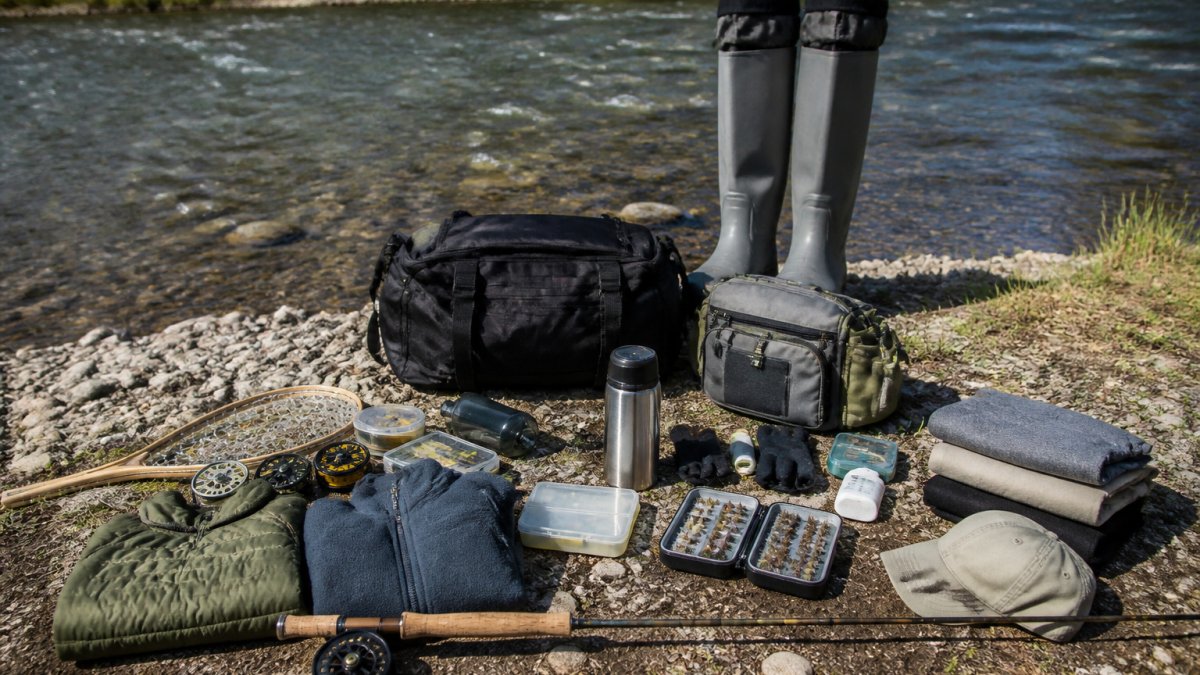
Gear should be light, comfortable and fitted for a young angler. A rod that is too long or heavy will tire a child quickly and make casting unsafe. Choose a short, light rod and a reel with a smooth drag.
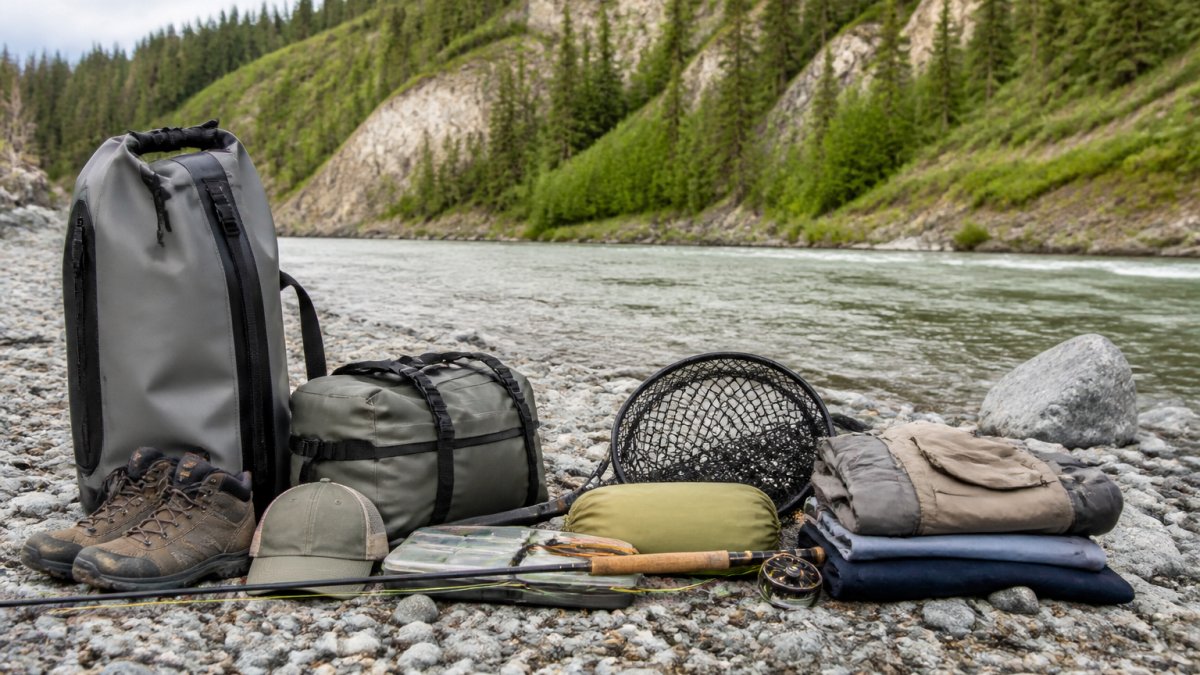
Our basic gear list for a family trip includes:
- A properly fitted life jacket for each child
- Felt-soled or grippy wading boots, sized for growing feet
- A brimmed hat and polarized sunglasses
- Quick-dry layers and a warm, windproof top
- A first-aid kit with blister dressings and any personal medication
- Barbless hooks and a pair of pliers for safe hook removal
- Snacks, water and a dry bag for spare clothing
Keep small items such as hooks and flies in a secured box, and make sure children know that sharp gear is handled only by adults.
Weather, Sun, Hydration and Emergency Planning in Alberta
Weather is the safety variable families plan for least and get surprised by most. In the foothills and mountain rivers, conditions can shift from warm and calm to cold, windy, and stormy within an hour, and the change often arrives faster than a family can walk back to the vehicle. A workable plan assumes the weather will turn and builds in a turnaround point before it does.
Reading the Forecast and the Sky
Check the forecast the night before and again the morning of the trip, and look specifically at the hourly wind, precipitation, and temperature trend rather than the daily high. A forecast high can hide a cold morning start and an afternoon drop behind a front. Pack for the low, not the high.
On the water, watch the sky rather than the app. Building cumulus clouds, a darkening horizon upstream, a sudden wind shift, or the sound of thunder are all cues to leave the water. Lightning is the most urgent: if you can hear thunder, you are close enough to be at risk.
Sun, Hydration and Cold Snaps
Sun exposure is stronger at altitude and doubles with reflection off water. With glare reduced and footing easier to judge, children can focus on the water and keep kids entertained fishing by spotting insects, watching for rises, and taking turns casting.
Hydration and food are safety equipment, not conveniences. Children dehydrate quickly and often do not ask for water. Offer water at every shore break, and pair it with a snack that has salt and carbohydrate.
Cold snaps deserve their own rule. Carry a dry bag with a full change of clothes for each child, including socks and a warm hat, and treat shivering as a stop signal.
Separation, Communication and Emergency Response
Agree on a meeting point before you leave the vehicle, and make it a physical landmark the child can find alone, the vehicle itself, a bridge, or a marked trailhead.
Mobile coverage is unreliable along many river corridors. Before the trip, save the local emergency contacts, download an offline map of the area, and tell someone outside the trip your exact location, plan, and expected return time.
If a family becomes separated, the adult should return to the agreed meeting point and wait, while another adult, if present, walks downstream along the bank calling and listening for the whistle. Do not split a small group further.
A Pre-Trip Safety Checklist
A short written checklist prevents the most common omissions. Before leaving the vehicle, confirm: life jackets fitted and worn; dry clothes and warm layers for each child; water and snacks; sunscreen and hats; first-aid kit with personal medications; whistle for each child; charged phone with offline map and emergency contacts saved; and a stated turnaround time and meeting point. Run through it out loud with every adult in the group so the plan is shared, not assumed.
Booking Your First Family Trip with River People Guides
If you are new to fly fishing or planning a trip with children, a guided outing can take much of the planning burden off your shoulders. Our guides know the local rivers, can recommend family-appropriate sections, and can teach safe wading and casting from the start. For current availability and rates, contact River People Guides directly through our website and book your first family trip.
Frequently Asked Questions
Do children need a fishing licence in Alberta?
Alberta's sportfishing rules set out who needs a licence and which exemptions apply to young anglers, and those rules change from year to year. Before you go, check the current Alberta sportfishing regulations for your specific waters and the age limits that apply. Confirm the details directly with the province, because licence requirements and youth exemptions can differ by age and by the type of water you plan to fish. A guided trip with River People Guides can help you understand which rules apply to your day on the river.
How do I keep my child safe while wading in river current?
Keep young children out of moving water deeper than their knees and never let them wade alone or past your reach. Have them wear a properly fitted life jacket at all times near the river, and teach them to face upstream, shuffle their feet and avoid crossing fast channels. Watch for slippery cobbles, cold water temperatures and sudden rises in flow. If the current looks stronger than the group can handle, pick a calmer section or call it a day.
What gear is essential for a safe family fly fishing trip?
Start with a properly fitted life jacket, sturdy wading footwear with good grip, and a warm layer that stays warm when wet. Add polarized sunglasses, a brimmed hat, sunscreen, water, snacks and a basic first-aid kit. Kid-sized rods and a simple fly setup make casting easier and reduce frustration. Pack a dry bag for spare clothes and keep your phone charged for emergencies. Pricing for gear depends on brand, size and quantity, so check current prices with River People Guides or your retailer.
Are there special rules for youth anglers on Family Fishing Weekends?
Family Fishing Weekends are announced by the province and typically allow licence-free fishing within set dates, but the exact rules, bag limits and water restrictions are set each year. Check the official Alberta announcement before you go and confirm that the waters you plan to use are included. Even on these weekends, all other sportfishing regulations still apply, including gear restrictions and protected species rules.