 ultimate-guide
What Should You Pack for a Multi-Day River Fishing Trip?
Last Updated: October 26, 2026
Quick Summary
A multi-day river fishing packing list covers everything you need to fish, eat, sleep, stay dry and repair gear for each night on the water. Pack in three stages: river gear for each day, camp gear for each evening, and emergency gear. Every item should earn its place for the whole trip.
- Split flies across at least two fly boxes so one soaked box does not end your selection.
- Carry a spare rod or a spare tip if it fits, so a broken tip does not end the trip.
- Keep one clean, dry set of clothes for camp, separate from river clothing.
- Use several color-coded dry bags sized by category, such as fishing, clothing, camp and food.
- Tell someone your route, take-out point and expected return time before you launch.
Table of Contents
- Multi-Day Fly Fishing Gear Checklist: Rods, Reels, Flies and Terminal Tackle
- Spare Equipment and Repair Kit
- Multi-Day Fishing Trip Clothing: Layers, Waterproof Shells and Sun Protection
- River Float Trip Packing List: Camp, Sleep and Personal Items
- Dry Bags, Weight Distribution and Packing Systems for the Boat
- Week-Long Float Trip Packing List: Quantities by Trip Length and Group Size
- Safety, Communication and Leave No Trace Planning Before You Launch
- Book Your Next Float Trip With River People Guides
- Frequently Asked Questions
Packing for a multi-day river fishing trip is a different job than packing for a day on the water.
The biggest shift is that every item must earn its place twice. A spare leader that is handy on a day trip becomes essential when you are three hours from a shop. Clothing has to cover cold mornings, wet afternoons and warm evenings.
Think about the trip in three stages: what you need on the river each day, what you need at camp each evening, and what you need in an emergency. Gear that fits all three stages is worth bringing. Gear that only serves one stage usually is not. This framing also helps you decide how much to bring, which we cover later in this guide.
Two questions shape almost every packing decision. First, how many nights are you out? Second, how much of the trip depends on self-support? A self-supported float puts the entire list on your shoulders, and in the boat.
Watch out: a packing list that looks complete on paper can still fail if nobody has tested the weight in the boat. Load your gear at home first, then check it against the boat's capacity and the number of people on board.
Multi-Day Fly Fishing Gear Checklist: Rods, Reels, Flies and Terminal Tackle
Your fly fishing kit is the core of the trip, and it is where most anglers bring either too little or far too much. For reels, pair each rod with a reel loaded with a floating line such as the AIRFLO SUPERFLO POWER TAPER WEIGHT FORWARD FLOATING LINE WF5F, and carry a sinking or sink-tip line if the rivers you plan to fish call for deeper presentations.
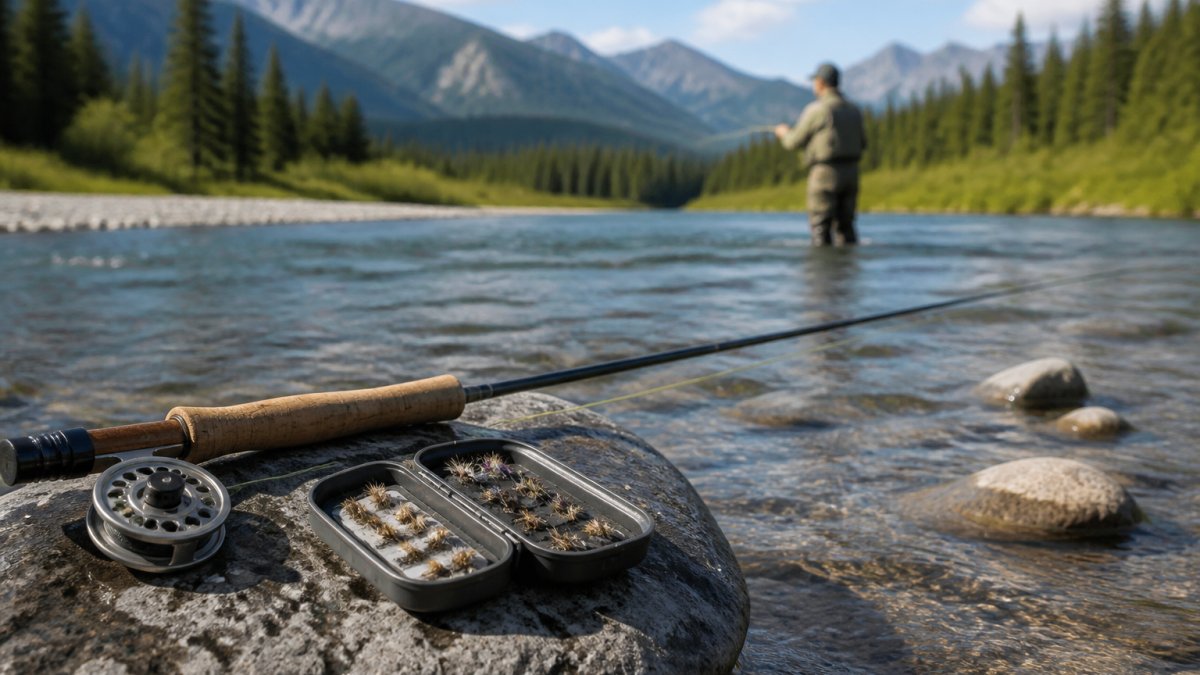
Flies and terminal tackle are where organization pays off. Split your flies across at least two fly boxes so that a dropped or soaked box does not wipe out your entire selection. You can shop worm patterns before you pack.
Terminal tackle deserves its own checklist. Pack several spools of tippet in a range of sizes, a few spare leaders, forceps, nippers or scissors, a fly floatant and a small tool for tying knots.
Watch out: do not pack all your leaders and tippet in the same location as your flies. If a bag gets soaked, you lose the entire system. Split critical items across two bags so one mistake cannot end your trip.
The core fly fishing kit breaks down into a few key categories worth checking before you leave.
| Item | Recommended quantity or setup | Key note |
|---|---|---|
| Rods | At least one rod you know well, plus a spare if it fits the tube | A spare keeps a broken tip from ending the trip |
| Fly boxes | At least two boxes | Splitting flies prevents losing the whole selection to one soaked box |
| Flies | A few dozen in each category | Weight the selection toward patterns that have worked on your rivers |
| Tippet | Several spools in a range of sizes | Label or tape spools and keep spares in a separate bag |
| Leaders | A few spares | Store them apart from your flies |
Spare Equipment and Repair Kit
Spare equipment is the difference between a minor problem and a trip-ending one. Carry a spare reel spool or an extra spool loaded with your main line, a spare fly line if you have room, and at least one extra leader kit.
For a boat trip, add a spare paddle or hand paddle, a multi-tool with pliers, and a length of rope. These are not fishing items, but they can save a trip when the boat needs an adjustment. Most floaters bring one spare paddle at minimum on a multi-day float, and a hand paddle is useful as a backup for steering in shallow water.
Keep the repair kit in a dedicated waterproof case that you know where to find. The first time you need it at 6 p.m. on a cold evening is the wrong moment to dig through the bottom of a dry bag.
Multi-Day Fishing Trip Clothing: Layers, Waterproof Shells and Sun Protection
Clothing on a river float follows one rule: layer for the coldest and wettest conditions you expect, then pack a set of dry clothes for camp. Quick-drying base layers, such as a synthetic or merino long-sleeve shirt, handle the temperature swings of a river morning better than cotton.
Sun protection is easy to overlook on overcast days, and the reflection off water can be strong. Pack a wide-brimmed hat or cap, a sun buff, fingerless gloves for rowing or handling a rod, and polarized sunglasses. Sunscreen should be waterproof and applied often.
The camp clothing set is just as important. Bring one clean, dry set of clothes you only wear at camp. Add warm socks, a pair of camp shoes, and long underwear for sleeping in cold conditions.
River Float Trip Packing List: Camp, Sleep and Personal Items
Camp and sleep gear is where the overnight element becomes concrete. A sleeping bag rated for the lowest overnight temperature you expect, a sleeping pad for insulation from the ground, a pillow, and a tent or shelter are the essentials. Plan for cool mornings even in summer, because river valleys hold cold air.
Personal items round out the camp kit. Keeping your total gear weight manageable ensures you remain agile on the riverbank, a principle that remains just as vital when you pack for backpacking.
Keep camp items grouped so you can find them quickly at the end of a long day. A single bag with your sleep system and a second bag with your personal items is easier to manage than scattering everything across the boat.
Dry Bags, Weight Distribution and Packing Systems for the Boat
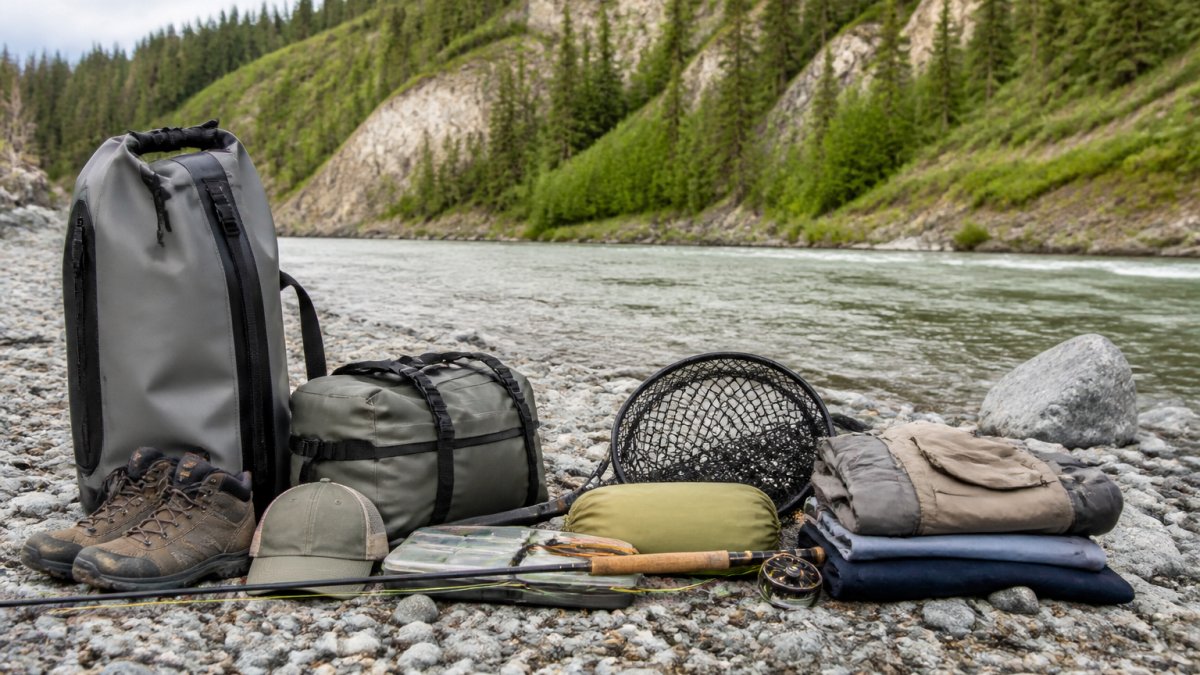
Dry bags are the backbone of a multi-day float. Use several bags sized for different categories rather than one large bag for everything. Color-code them so you can identify contents from across the boat: one color for fishing gear, one for clothing, one for camp, one for food.
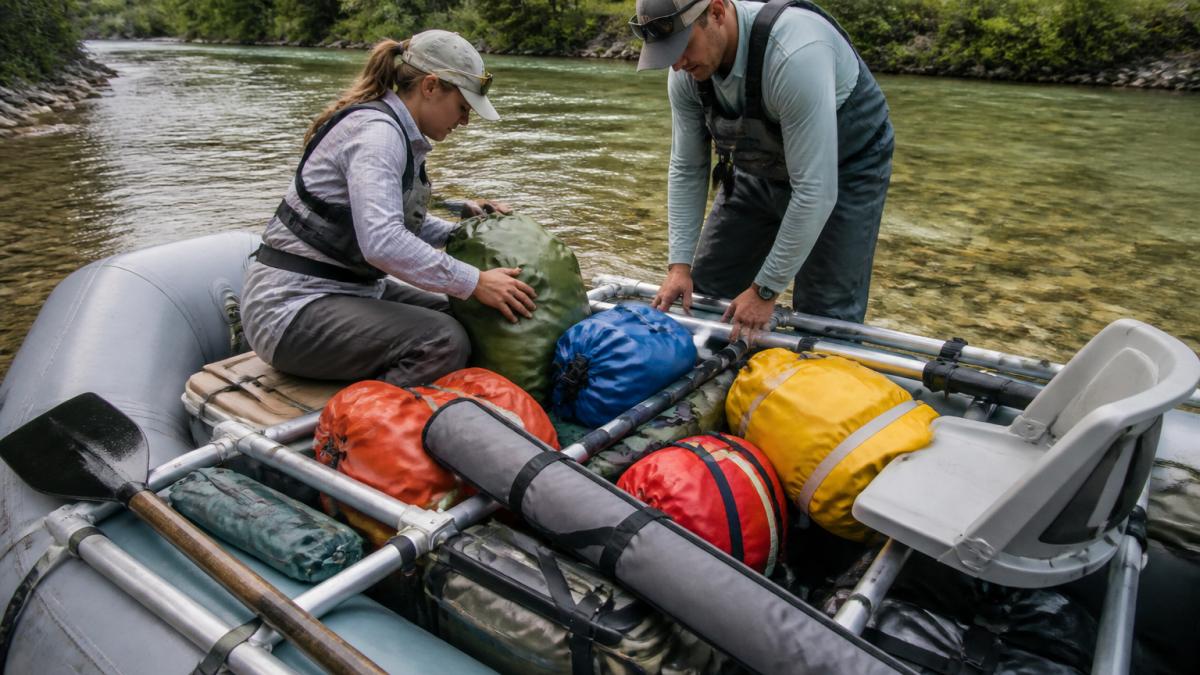
Weight distribution matters for stability and for steering. Place heavier items low and near the center of the boat, and spread weight evenly from bow to stern.
This guide assumes you are floating in a two-person raft or similar craft, such as the NRS Approach 120 Fishing Raft Two-Person Package, which has a different load capacity than a larger rig.
Watch out: bags that sit against the raft's tubes or frame can chafe or puncture over a multi-day trip. Use padding or an extra layer of tarp between heavy bags and sharp edges.
Week-Long Float Trip Packing List: Quantities by Trip Length and Group Size
Quantities change with trip length and the number of people on board. For a two-to-three-night float, a single set of clothes plus one spare set for camp is usually enough. For a week-long trip, plan for a clean camp set every two or three days and a reliable way to wash or air out clothing.
For fishing gear, the number of rods and reels usually depends on the group. Two anglers can often share spare equipment such as a spare paddle, repair kit and first aid supplies, while each person keeps their own rod and fly selection.
Pack for the longest and most demanding day, then add a buffer. If your planned trip is four nights, plan for five. Weather and water conditions can change quickly in Alberta, and an extra day of supplies is cheap insurance.
Safety, Communication and Leave No Trace Planning Before You Launch
Before you launch, tell someone who is not on the trip your route, your planned take-out point and your expected return time. Carry a method of communication appropriate to the area, whether a satellite messenger, a marine radio if you have one, or a phone with offline maps.
Safety gear should include a personal flotation device for each person, a whistle, a throw rope if your craft requires one, and a basic first aid kit.
Leave No Trace principles apply to every multi-day trip. Pack out all trash and food waste, use established fire rings or a camp stove rather than building new fires, and keep your fishing waste out of the water. Store food securely overnight to avoid attracting wildlife.
A small caveat: if planning a float feels like more work than you want, a guided trip is a legitimate alternative.
Book Your Next Float Trip With River People Guides
Packing for a multi-day river trip is easier when you have a clear list and a plan for every stage of the float. Start with the core fishing gear, layer your clothing for changing conditions, organize your dry bags for weight and access, and scale your quantities to the length of the trip and the number of people. Then check your safety, communication and Leave No Trace plans before you launch.
If you want a guided river fishing trip, reach out to River People Guides. Ready to plan your next trip? Book now and let's get you on the water.
Frequently Asked Questions
What should I pack for a multi-day river fishing trip?
Pack in four groups: fishing gear, clothing, camp and sleep items, and safety equipment. Fishing gear covers at least one spare rod or a rod tube, reels with spare spools, a fly box with enough flies for the trip, leaders, tippet, forceps, and floatant. Clothing should be quick-drying layers, a waterproof shell, and a warm mid-layer for cool mornings. Add a sleeping bag rated for the overnight temperatures, a dry bag for each sleeper, sunscreen, polarized sunglasses, a headlamp, a first aid kit, and a satellite or two-way communication device. Build your final list from the specific river's conditions and the number of nights you will spend on the water.
What fishing gear do I need for a multi-day float trip?
Bring a primary fly rod and reel with a spare rod in a protective tube, since one broken rod can end the trip. Carry at least two fly lines suited to the water, such as a floating line and a sink tip, plus extra leaders and tippet in a range of sizes. A fly box with a variety of dry flies, nymphs and streamers works for most rivers. Include forceps, nippers, a small multi-tool, fly floatant and a net. Keep spare spools and a small kit for repairing guides and reel parts. Pack everything in hard-sided or padded tubes inside dry bags so it stays protected in the raft.
How do you keep fishing gear dry on a river trip?
Store every item that cannot get wet in a roll-top dry bag rated for submersion, and label each bag by its contents so you can find things without unpacking the whole boat. Keep electronics, your phone, documents and medications in a separate small dry bag or waterproof case. Fly boxes and reels work best inside a second sealed container. Check seals and buckles before each launch, since a single bag with a bad closure can soak a week of clothing. Carry a few extra plastic bags for wet items you collect during the day, such as used rain layers.
How much clothing should I pack for a week-long river trip?
Plan for roughly one clean set of clothes per day on the water, plus two sets for camp and one for sleeping, because river clothing gets wet and needs a chance to dry between uses. For a week, that usually means three to four pairs of quick-drying pants or shorts, four to five wicking shirts, two warm mid-layers, long underwear for cool mornings, a waterproof shell, fingerless gloves, a sun buff, a hat, and water shoes plus a second pair of camp shoes. Pack clothes in separate dry bags by function, such as worn, clean and sleep, so you always have something dry.