 how-to
How do you stay safe fly fishing on Alberta rivers?
Last Updated: October 26, 2026
Quick Summary
Fly fishing safety in Alberta requires wearing a wading belt and chest waders, using a wading staff for three points of contact, never wading alone, and checking river gauge data before every trip. Cold water, fast currents, and slippery rocks create real hazards that are avoidable with the right knowledge and gear.
- Never wade alone; always fish with a partner who can help if something goes wrong
- Face sideways to the current with your body horizontal to the flow to reduce force pushing against you
- Wear a wading belt to slow water entry if you fall and prevent waders from filling like an anchor
- Check the river gauge for your specific access point and set go/no-go thresholds before leaving home
- Carry a satellite communicator or personal locator beacon if fishing outside cell coverage areas
Table of Contents
- Why fly fishing safety matters on Alberta rivers
- How to wade safely in a river
- Essential fly fishing safety gear
- Understanding Alberta river conditions
- Alberta fishing regulations and time-of-day restrictions
- Solo fishing and trip-sharing safety precautions
- Fish handling and catch-and-release best practices
- Plan your next guided fishing trip with expert instruction
- Frequently Asked Questions
Why fly fishing safety matters on Alberta rivers
Fly fishing on Alberta rivers is rewarding, and risky if you're unprepared. Cold water, fast currents, slippery rocks, and remote locations create real hazards, and every year anglers face preventable injuries, some fatal. Most accidents are avoidable with the right knowledge and gear.
This guide covers fly fishing safety tips for Alberta rivers.
How to wade safely in a river
Wading is where most accidents happen: moving water, unseen rocks, and one slip ends badly fast.
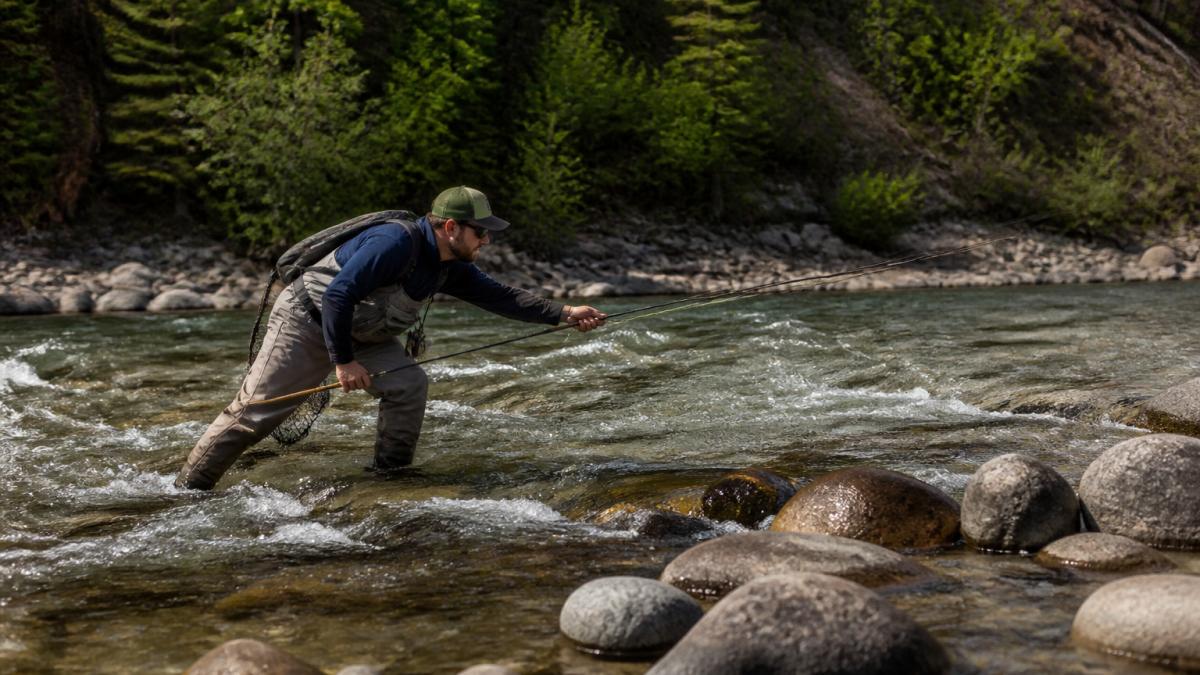
The first rule: never wade alone. Fish with a partner who can help if something goes wrong.
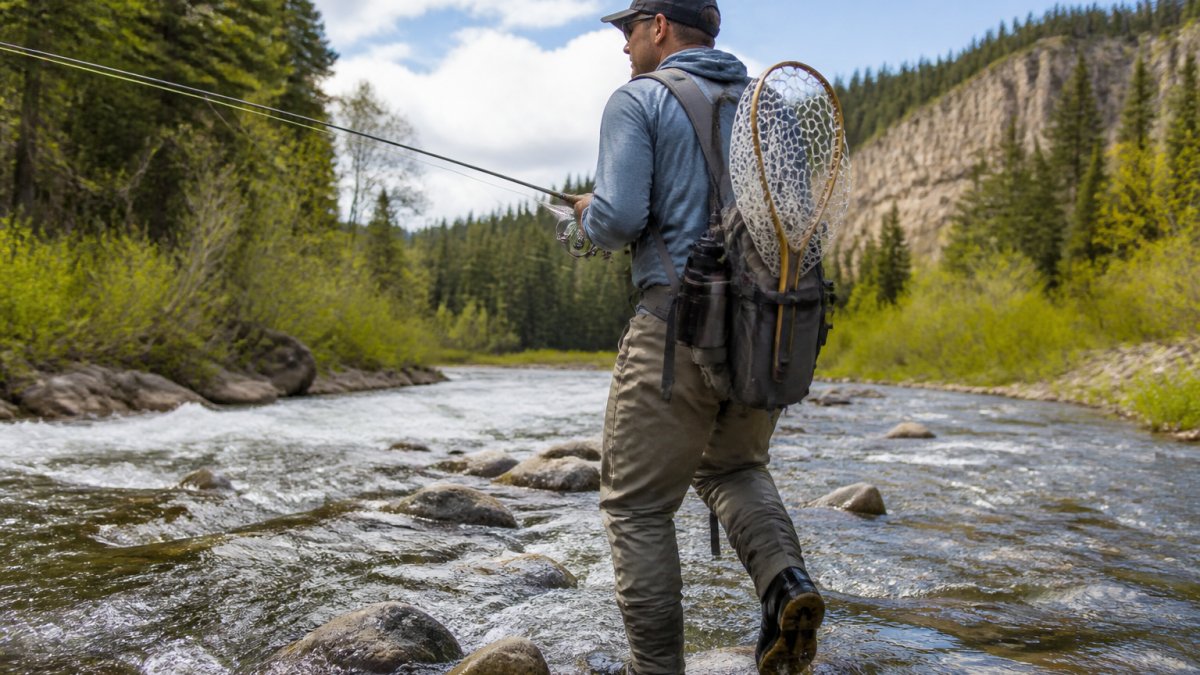
Use the right body position. Face sideways to the current with your body horizontal to the flow, which reduces the force pushing against you.
Plant your feet carefully. Feel each rock before shifting weight, use a wading staff for three points of contact, and shuffle forward slowly rather than lifting and stepping.
Know when to turn back. If water reaches your waist, you can't feel the bottom, or the current pushes you sideways, stop. Pride doesn't matter; getting out alive does.
Reading water: seams, eddies, and drop-offs
Fish live in specific spots. So do hazards. Reading the water keeps you safe and helps you catch fish.
Seams are where fast and slow water meet. Fish hang there. So do underwater obstacles. Approach seams from the side, not head-on.
Eddies are circular currents behind rocks and banks. They look calm but can pull you downstream fast, so avoid wading directly into one.
Drop-offs are sudden depth changes where shallow water turns over-your-head deep. Scout your route and watch for sudden color changes, darker water usually means deeper water.
River-crossing technique and current assessment
Sometimes you need to cross. Do it wrong and you drown. Do it right and you're fine.
Assess the current first. Is it fast or slow? Can you feel the bottom? Can you see obstacles? If any answer is "no," find another route.
Cross at an angle. Angle downstream slightly so the current helps push you across instead of fighting you.
Use a wading staff. Place it downstream, brace against it, and move one foot at a time, keeping three points of contact. Never remove the staff until your other foot is planted.
Watch for hazards. Rocks, logs, and drop-offs hide underwater. Feel your way. Move slowly. Speed kills here.
Essential fly fishing safety gear
Gear isn't optional. It's the difference between walking away and being carried away. But a pile of equipment isn't a safety system. What matters is knowing what to wear, what to carry, and what to check before every trip. Use this as a pre-trip checklist, not a shopping list.
What to wear in the water
A wading belt is non-negotiable. It cinches your waders at the waist and slows water entry if you fall. Most wader manufacturers ship one; if yours didn't, buy one.
Chest waders rated for the season. Neoprene insulates but is heavy and hot in summer; breathable waders with layered insulation are more versatile.
A wading staff. Collapsible aluminum or carbon staffs clip to your belt and deploy in seconds, the highest-value piece of safety gear for river wading because it gives you a third point of contact.
A personal flotation device (PFD). Wear an inflatable belt-style PFD or a low-profile fishing vest PFD in fast water, deep holes, and any float trip.
What to carry on your person
- A throw rope in an easily opened bag, clipped where you or a partner can reach it. Practice deploying it on land first.
- A headlamp with fresh batteries, even on a day trip. Light fades fast in valley bottoms, and a twisted ankle at dusk turns a short walk into a rescue.
- A basic first-aid kit with gauze, tape, antiseptic, blister treatment, and personal medication, plus a compact emergency blanket, it weighs almost nothing and matters if someone goes into cold water.
- A whistle on a lanyard. Three blasts is a widely recognized distress signal, and a whistle carries farther than your voice over river noise.
- A communication device matched to your access. A satellite communicator or personal locator beacon is the realistic option outside cell coverage. Test it before the season and register it if required.
- Warm layers in a dry bag. Fleece or wool, not cotton. Cotton holds water and accelerates cooling. Pack one more insulating layer than the forecast suggests.
- A small repair kit, patch material for waders, a spare bootlace, and zip ties. A leaking wader mid-river forces an early exit; a patch gets you back to the truck dry.
What to leave in the vehicle
A dry change of clothes, a towel, and warm footwear. If you go in, the fastest way to stop cooling is to get out of wet clothes. Keep them in a sealed bin so they stay dry.
Wear and carry this gear on every trip to stay safe in Alberta rivers.
| Gear | Purpose | Key detail |
|---|---|---|
| Wading belt | Slows water entry if you fall | Non-negotiable; cinches at waist |
| Chest waders | Insulation and water protection | Check seams and booties before each trip |
| Wading boots | Grip on riverbed | Felt, studded rubber, or studded soles |
| Wading staff | Third point of contact | Collapsible aluminum or carbon |
| Personal flotation device | Prevents drowning in fast water | Belt-style or low-profile fishing vest |
| Throw rope | Rescue tool for partner | Keep in easily opened bag |
| Headlamp | Navigation in fading light | Carry fresh batteries |
| Satellite communicator | Emergency communication | Essential outside cell coverage |
Understanding Alberta river conditions
Rivers change constantly. Water level, temperature, and flow shift with weather, snow melt, and dam releases. You need to know what you're walking into, and a decision rule for when to walk away. Checking conditions isn't a formality; it's the core safety skill on moving water.
Cold-water hazards and seasonal changes
Cold water is deadly. Rivers here stay cold year-round. Even in summer, water temperature rarely exceeds 15°C.
Hypothermia can build without a fall. Prolonged wading in cold water cools your core.
Winter fishing is riskier. Ice forms along banks, water temperature drops further, and ice-free reaches narrow, leaving fewer places to wade safely and fewer exit points.
Spring brings high water. Snow melt raises flow dramatically, rivers wadeable in March can be dangerous by April.
Summer is generally safest for wading. Levels drop and temperatures rise slightly. But don't get complacent, afternoon thunderstorms can spike a tributary within an hour, and cold water still kills.
How to read flow and level data before you go
Never show up and hope conditions are good. Check first, the same way every time so you can compare.
Learn your river's normal range. Check the gauge through a full season, even on days you don't fish.
Watch the trend, not just the number. A rising hydrograph after rain upstream is a warning even if the current level looks fishable.
Read the water color at the access point. Clear water lets you see the bottom and your footing.
Check the weather upstream, not just overhead. Rain that falls 50 km up the valley reaches you later.
Set your go/no-go thresholds before you leave
Decide your limits at home, when you're calm, not at the bank after you've invested the drive. Write them down for the river you're fishing. A workable framework:
- Green, go. Flow within the normal seasonal range, stable or falling, water clear enough to see the bottom, no rain forecast upstream.
- Yellow, go with changes. Flow above normal but stable, visibility reduced, or a rising trend that's flattening. Fish easier water, stay closer to the bank, skip the planned crossing, and shorten the day.
- Red, don't go. Rapidly rising flow, water too turbid to see your footing, recent heavy rain upstream, or any reading well above the seasonal norm. No fish is worth a red day.
Scout before you commit. If you're unfamiliar with the river, visit before fishing. Walk the reach, identify your wading route, mark the hazards, and pick your exit points. This takes an hour and is the cheapest safety investment you'll make all season.
Use local reports as a cross-check, not a substitute. Guides and outfitters fish daily and know which sections are holding and which are blown out, but their report is about their water on their schedule. Pair it with the gauge and your own eyes at the access point.
Alberta fishing regulations and time-of-day restrictions
Fishing legally protects fish populations and keeps you out of trouble. Fines are steep, and illegal fishing can get you banned from rivers you love.
Solo fishing and trip-sharing safety precautions
Fishing alone increases risk dramatically. A partner can call for help, throw you a rope, or get you warm if you're hypothermic. Alone, you have none of that.
If you must fish solo:
- Tell someone exactly where you're going and when you'll return
- Carry a satellite communicator or personal locator beacon
- Fish during daylight only
- Avoid fast water and deep holes
- Limit your time in the water
- Bring extra warm clothes
- Have a first aid kit
If you're sharing a trip:
- Agree on a plan before you start
- Stay within sight of each other
- Check in regularly
- Know basic first aid
- Carry a throw rope and know how to use it
- Have a meeting point if you get separated
Solo fishing in remote areas with no communication device is genuinely risky. A fall, a heart attack, or a simple mistake becomes life-threatening. Don't do it.
Fish handling and catch-and-release best practices
How you handle fish matters. For them and for you.
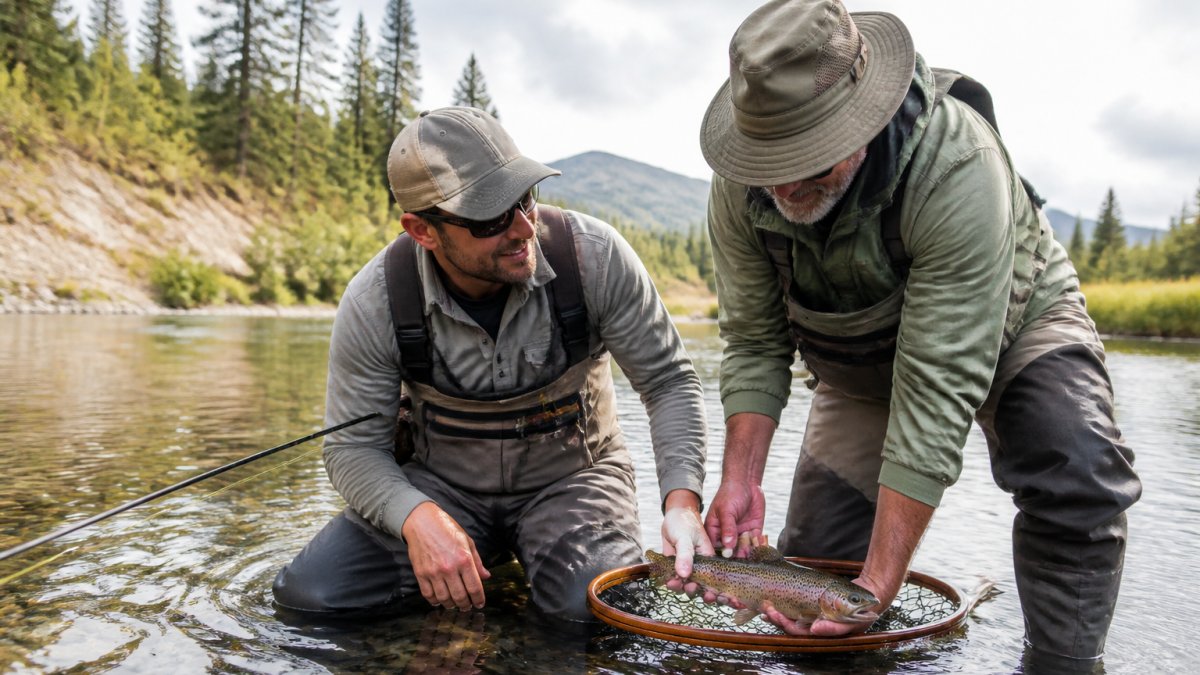
Keep your hands wet. A dry hand damages the fish's protective coating. This opens them to infection.
Support the fish horizontally. Holding them vertically damages their spine.
Keep fish in the water as much as possible. Photo time should be 30 seconds maximum.
Revive exhausted fish. If a fish is gasping, hold it gently in moving water. Move it forward slowly.
Handle barbless hooks. They're easier to remove and cause less damage. If you use barbed hooks, crush the barb first.
Never squeeze the fish. Pressure damages internal organs. Gentle support only.
Good catch-and-release practice keeps fish alive and rivers healthy for future seasons.
Plan your next guided fishing trip with expert instruction
Book a guided river fishing trip with River People Guides.
We provide guided river fishing trips for anglers of all skill levels.
Learn about our winter fly fishing strategies to understand how conditions change and what that means for your safety planning.
Fly fishing on Alberta rivers is an incredible experience, but mistakes have real consequences. The anglers who last longest respect the water: they prepare, check conditions, fish with partners, and know their limits.
River People Guides is based in Bragg Creek and offers guided river fishing trips. Book a guided trip.
Frequently Asked Questions
What should I wear when wading in a river for fly fishing?
Wear clothing suited to the conditions. Keep a dry change of clothes on shore.
How can I tell if a river is safe to wade on a given day?
Check river flow rates and water conditions before heading out. Assess conditions before deciding whether to wade.
What fly fishing safety gear should I always bring?
Consider what safety equipment and clothing may be appropriate for the conditions of your trip.
What are Alberta's fishing regulations and time-of-day restrictions?
Check an official source for the current rules that apply to your fishing location and date.