 how-to
Private Fly Fishing Instruction: A Beginner's Guide
Table of Contents
- What Private Fly Fishing Instruction Offers
- Beginner Fly Fishing Lessons: What to Expect
- Fly Fishing Casting Lessons and Technique Development
- Reading River Currents for Fly Fishing Success
- Fly Fishing Lesson Equipment and What to Bring
- Private Lessons vs. Group Classes vs. Guided Trips
- Getting Started: How to Book Your First Lesson
- Frequently Asked Questions
Last Updated: October 19, 2026
What Private Fly Fishing Instruction Offers
Private fly fishing instruction transforms how you experience the water. Unlike group classes or solo trial-and-error, one-on-one coaching accelerates your learning and builds confidence from your first cast. At River People Guides, personalized instruction can accelerate your learning.
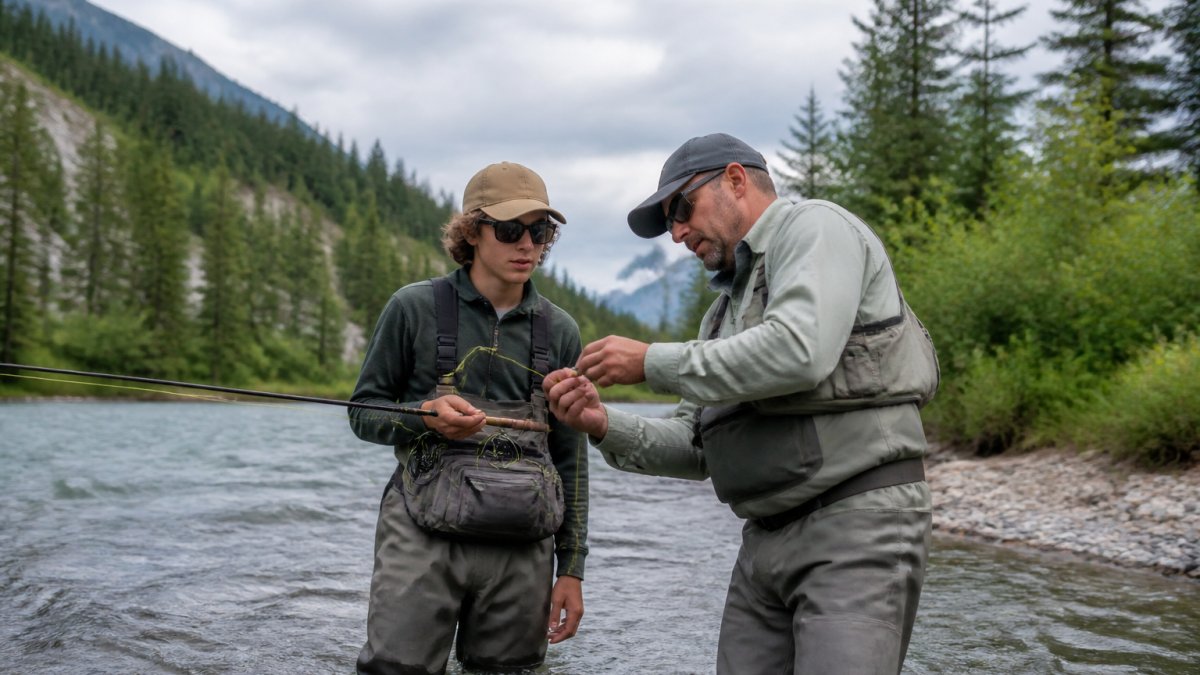
Private fly fishing instruction focuses entirely on your goals, pace, and skill level. Whether you're picking up a rod for the first time or refining advanced techniques, an instructor adapts every session to your needs. You get immediate feedback on your casting mechanics, line management, and fly selection, corrections that would take months to discover alone.
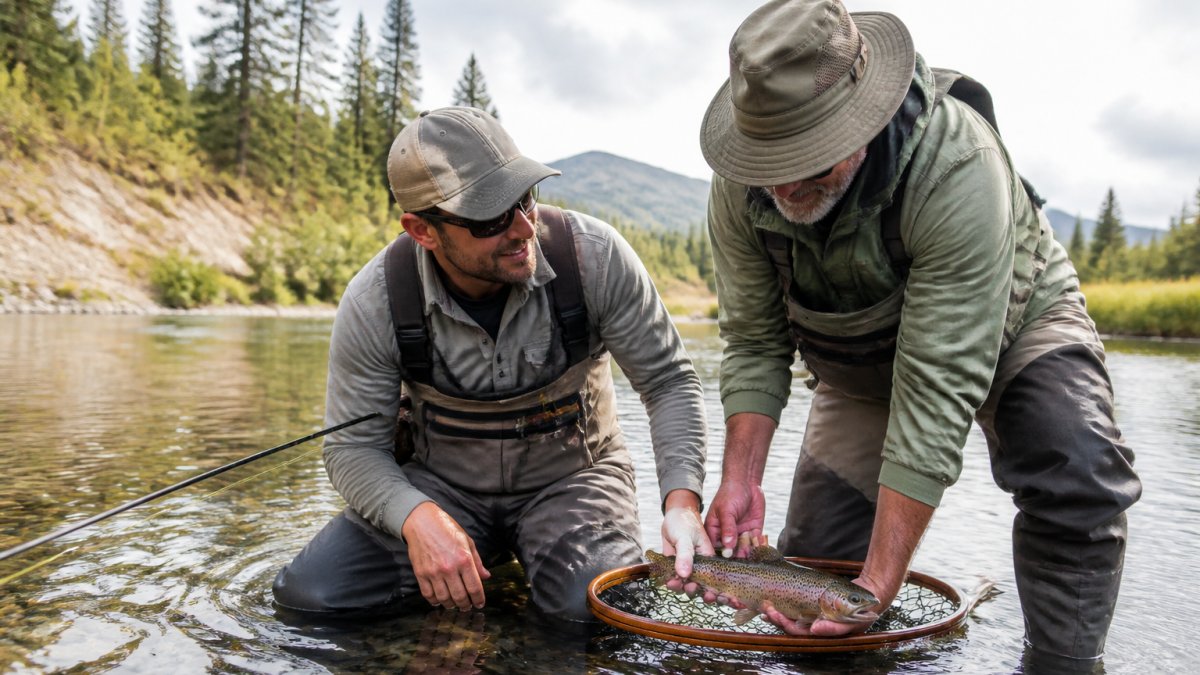
The real value emerges on the water. You'll learn to read river currents, understand trout behavior, and develop the muscle memory that separates confident anglers from frustrated ones. A guide shares local knowledge, where fish hold in different seasons, which flies work when, how to approach specific pools, that no book or video can fully convey.
Beginner Fly Fishing Lessons: What to Expect
Your first beginner fly fishing lesson typically covers the fundamentals that make everything else possible. Most instructors start on land before moving to water, teaching you grip, stance, and the basic casting motion in a controlled environment where you can focus without the pressure of actual fishing.
Expect to learn the overhead cast first, the foundation for all other fly casting techniques. Your instructor will watch your arm motion, wrist action, and timing, correcting small issues that compound into bad habits. You'll practice the forward cast and backcast separately until the rhythm becomes automatic.
After mastering basic mechanics on land, you'll move to shallow water where you can see your line and feel the difference between a tight loop and a sloppy one. This is where fly fishing begins to click. You'll cast to targets, adjust your distance and accuracy, and start understanding how the fly line behaves.
A typical beginner lesson covers:
- Grip and stance fundamentals
- Overhead cast mechanics and timing
- Basic line control and mending
- Introduction to reading water
- First attempts at casting to rising fish
More importantly, you'll understand what good form feels like, which means you can practice correctly on your own.
Fly Fishing Casting Lessons and Technique Development
Fly fishing casting lessons focus on the mechanics that separate casual anglers from skilled ones. The overhead cast is only the beginning. Once you master that, you'll learn roll casts, false casts, and distance casting, each with specific applications on the river.
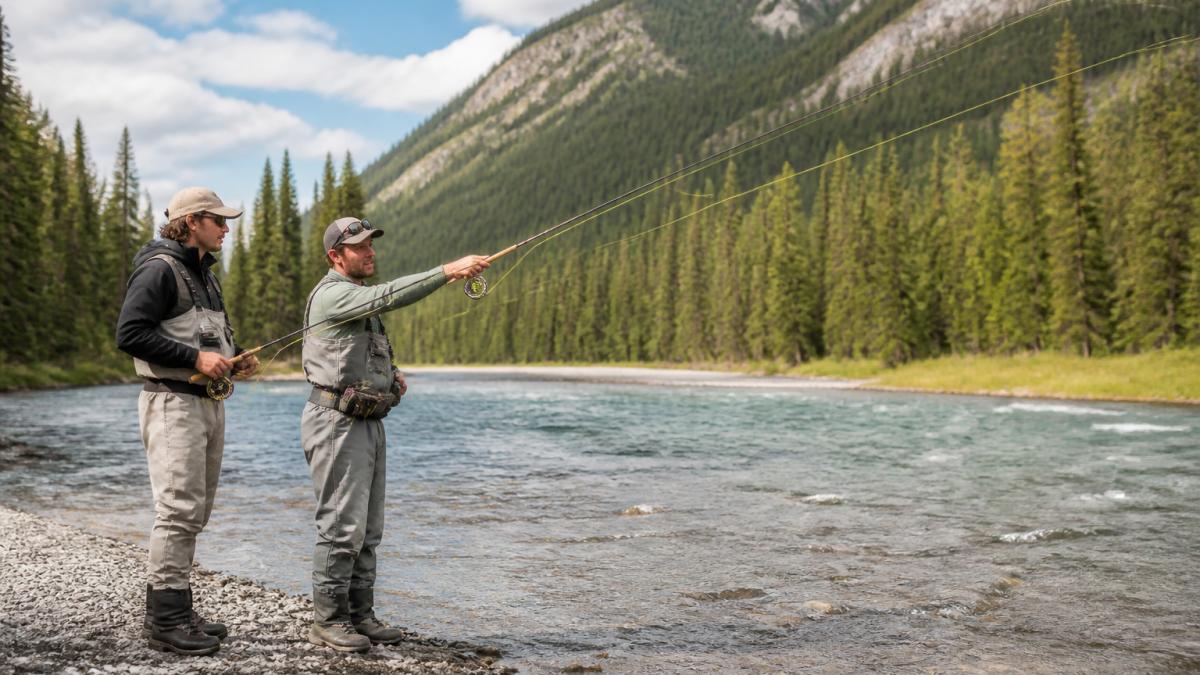
A roll cast is your secret weapon in tight spaces where you can't make a full backcast. Your instructor will teach you how to load the rod using water tension, then accelerate forward to unfurl the line. This technique opens up narrow streams and brush-lined pools that would be impossible to fish otherwise.
False casting, the ability to keep your line in the air while adjusting distance or direction, develops your rhythm and timing. Once you internalize the pause between backcast and forward cast, everything else becomes intuitive.
Distance casting comes later but matters more than most beginners realize. Being able to reach fish 50-plus feet away dramatically increases your opportunities. Your instructor will teach you how to generate line speed through efficient arm motion rather than brute force, and how to manage longer lengths of line without losing control.
Advanced casting techniques include:
- Mending to control line drift and fly drag
- Reach casts to position your fly at specific angles
- Double haul to generate extra line speed
- Sidearm and underhand casts for unconventional situations
Practice between lessons accelerates your progress. Most instructors will give you specific drills to work on, casting to targets, practicing your timing, building muscle memory. Twenty minutes of focused practice beats hours of mindless casting.
Reading River Currents for Fly Fishing Success
Reading river currents separates successful fly fishing from endless casting into empty water. Understanding how current shapes fish behavior and fly presentation is the knowledge that transforms a good day into a great one.
Trout position themselves where they can eat with minimal effort. They hold in current breaks, behind rocks, in slower water along the bank, or in deep pools where the main current slows. A skilled angler reads these current patterns and places the fly exactly where a hungry fish will notice it.
The main current runs fastest in the center of the channel. Water slows along the banks, behind obstacles, and in deeper pools. Trout exploit these slower zones because they conserve energy while staying positioned to intercept food drifting downstream. When you spot a current break, you've found where fish are likely holding.
Understanding drift is equally critical. Your fly must move naturally with the current, not faster or slower. If your line drags the fly across the current, it moves unnaturally and spooks fish. Mending, small upstream flips of your line, keeps your fly drifting at the same speed as the water, creating the illusion of a natural insect.
Current reading patterns include:
- Seams where fast and slow water meet
- Eddies behind large rocks or logs
- Deeper pools where current slows
- Outside bends where current scours deeper water
- Inside bends where current deposits slower zones
Your instructor will teach you to read these patterns in real time, pointing out where fish are likely holding and how to present your fly to reach them. This knowledge compounds over time; eventually, you'll walk to a new stretch of river and immediately spot the productive zones.
Fly Fishing Lesson Equipment and What to Bring
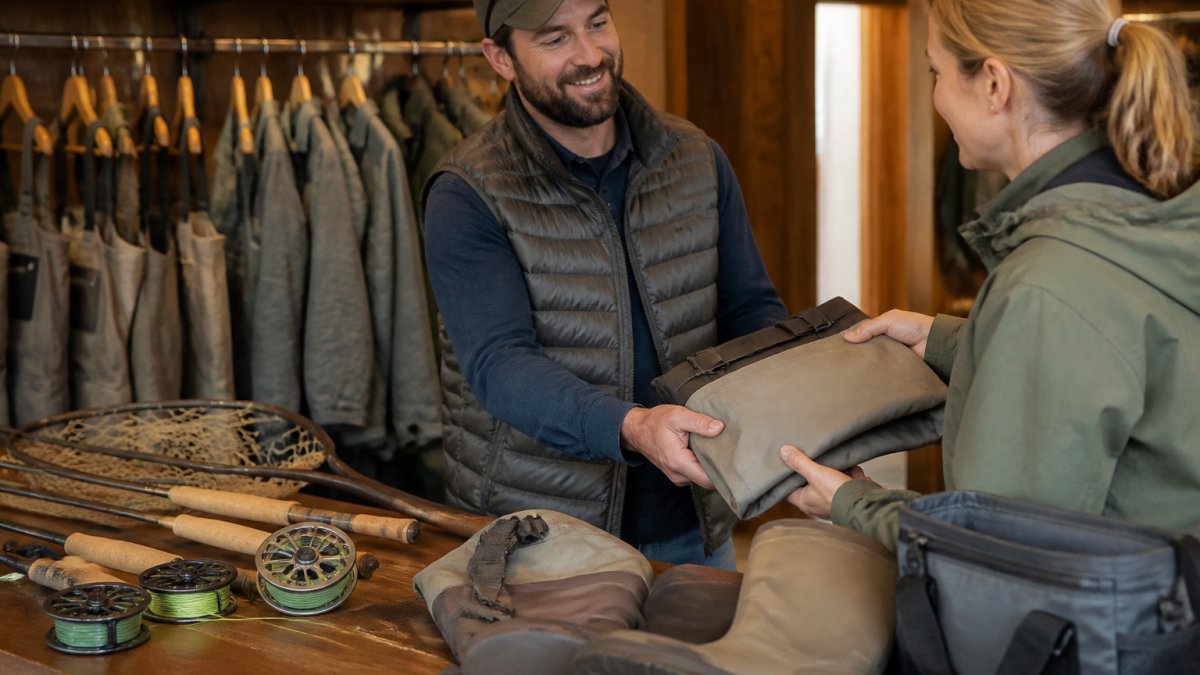
Fly fishing lesson equipment depends on whether you own gear or are learning on borrowed or rental equipment. If you're renting, your instructor or outfitter will provide everything: rod, reel, line, and flies. If you own gear, bring what you have and let your instructor evaluate it.
Essential equipment for a lesson includes:
- Fly rod and reel (5-7 feet, 3-5 weight for most rivers)
- Fly line appropriate to your rod weight
- Leader and tippet material
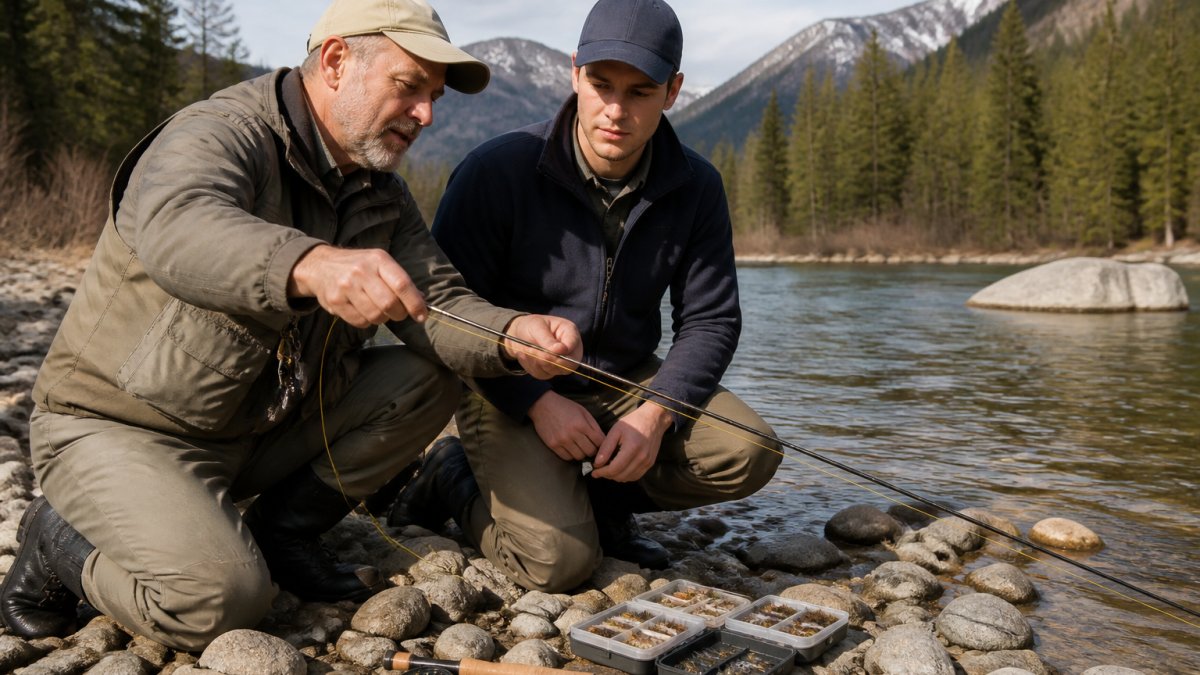
- Selection of flies (your instructor will recommend sizes and patterns)
- Waders or wade pants if fishing in water
- Wading boots with good grip
- Polarized sunglasses to see fish and current patterns
- Hat and sun protection
- A small backpack or vest to carry extras
What to bring beyond gear matters too. Bring water, snacks, and a notebook to jot down what you learned. Comfortable, weather-appropriate clothing is essential; fly fishing involves hours on your feet in variable conditions. Layers work better than a single heavy jacket because you'll warm up as you cast.
Many beginners wonder about fly selection. Your instructor will provide flies or recommend specific patterns. Your guide can advise on size and color based on current conditions.
Private Lessons vs. Group Classes vs. Guided Trips
Choosing between private lessons, group classes, and guided fishing trips depends on your goals, budget, and learning style. Each format offers distinct advantages.
Private fly fishing instruction gives you undivided attention and customized pacing. Your instructor focuses entirely on your needs, corrects your specific issues, and adjusts the lesson in real time based on your progress. This format works best if you want rapid skill development, have limited time, or prefer one-on-one coaching. Private lessons are more expensive but deliver faster results.
Group classes create community and shared learning. You'll practice alongside other beginners at similar skill levels, which can be motivating. Group dynamics often make learning more enjoyable. However, your instructor has limited time for individual feedback, and the pace may not match your learning speed. Group classes cost less than private instruction but take longer to build competence.
Guided fishing trips combine instruction with actual fishing. You'll learn techniques while pursuing real fish in productive water. This format works best once you have basic casting skills and want to apply them in realistic conditions. A guide shares local knowledge about where fish are, what they're eating, and how to approach specific situations. Guided trips are longer (half-day or full-day) and more expensive than lessons but deliver the complete experience.
| Format | Best For | Duration | Investment | Feedback |
|---|---|---|---|---|
| Private Lesson | Rapid skill building, custom pacing | 2-4 hours | Higher | Intensive, real-time |
| Group Class | Community, affordability, basics | 2-3 hours | Lower | Limited per person |
| Guided Trip | Applying skills, local knowledge, fishing | 4-8 hours | Higher | Contextual, results-focused |
Many anglers combine formats. Start with private lessons to build fundamentals, join a group class to practice with peers, then book guided trips once you're ready for real fishing. This progression maximizes learning efficiency and keeps costs reasonable.
Getting Started: How to Book Your First Lesson
Booking your first private fly fishing instruction lesson involves a few straightforward steps. Start by deciding what you want to learn and when you're available. Peak fishing season runs spring through fall, with summer offering the most flexibility and stable conditions.
Contact your preferred instructor or guide service to discuss your goals. Be honest about your experience level, whether you're completely new to fly fishing or have some background. Explain what you hope to accomplish: basic casting, improving your technique, or preparing for a guided trip.
Confirm logistics including date, time, duration, and meeting location. Most instructors meet at convenient access points on productive rivers. Ask whether they provide equipment rentals or if you should bring your own. Clarify what you should bring: waders, sunscreen, snacks, a notebook.
Discuss pricing and payment options beforehand. Ask what's included in the lesson and whether there are any add-on costs. Some instructors include fly recommendations or provide a short-term practice plan after your lesson.
Before your lesson:
- Get a fishing license if you don't have one (required to fish in Alberta)
- Practice basic casting if possible, even in your yard
- Prepare questions about techniques or local waters
- Dress appropriately for the weather and water conditions
- Arrive 10-15 minutes early to settle in
River People Guides specializes in private fly fishing instruction for all skill levels. We'll customize your lesson to match your goals, provide expert feedback on your casting and technique, and share local knowledge about reading water and understanding trout behavior. Book now and discover why personalized instruction accelerates your progress.
Private fly fishing instruction is an investment in skills that will reward you for decades on the water. The right instructor doesn't just teach casting; they build your confidence, share the local knowledge that separates success from frustration, and help you develop the habits that create lifelong fishing enjoyment.
Frequently Asked Questions
Can complete beginners take private fly fishing lessons?
Yes. Private fly fishing instruction is designed for all experience levels, including those who have never cast a line. A qualified instructor will start with casting fundamentals, teach you how to grip the rod, explain basic fly selection, and build your confidence on the water. Most beginners can land their first fish within a single lesson when working one-on-one with a professional guide.
What should I bring to a fly fishing lesson?
Contact your guide about what equipment they provide versus what you need to bring. Most private lessons include rod, reel, and flies. Bring weather-appropriate clothing, a hat, sunscreen, and water. Wear wading boots or water-friendly footwear with good grip. Ask your instructor if you need to bring a fishing license.
How do you read river currents for better fly presentation?
Reading currents means understanding water speed, depth, and direction to position your fly where fish hold. Fish rest in slower water behind rocks and along banks to conserve energy. Your instructor will teach you to spot seams where fast and slow water meet, identify feeding lanes, and adjust your casting angle so your fly drifts naturally. This skill directly improves your catch rate.
How long does it take to learn fly fishing?
Basic casting and fishing fundamentals take one to two lessons. Most anglers develop solid intermediate skills, accurate casting, fly selection, and reading water, after four to six lessons spread over several weeks. Becoming proficient in varied conditions and advanced techniques takes ongoing practice. Private instruction accelerates your learning compared to teaching yourself.