 how-to
Improve Fly Fishing Catch Rate: A Step-by-Step Guide
Last Updated: October 23, 2026
Quick Summary
To improve fly fishing catch rate, master accurate casting, read river currents to find where trout hold, and match your fly selection to seasonal hatches and water clarity. Focus on natural drift through proper mending and adjust your presentation based on water temperature and what insects are actually present.
- Use a rod between 8 and 9 feet long, with a 5-weight line, as a versatile choice for most rivers
- Fish nymphs in size 14 to 16 pheasant tail as your starting pattern, then adjust size and color to conditions
- Set your indicator so the fly drifts 6 inches to a foot off the bottom when nymphing
- Mend immediately after your fly lands to create a drag-free drift that triggers strikes
- Keep a log of date, water temperature, fly pattern, and results to identify what works after three to five trips
Table of Contents
- What You'll Need Before You Start
- Understanding Seasonal Changes and Water Temperature
- Reading River Currents for Better Fly Presentation
- How to Choose a Fly for Trout
- Fly Fishing Casting Tips to Improve Your Presentation
- How to Mend a Fly Fishing Line for Natural Drift
- Troubleshooting Missed Strikes and Low Catch Rates
- Common Mistakes to Avoid
- Frequently Asked Questions
What You'll Need Before You Start
Before you hit the water to improve fly fishing catch rate, get your fundamentals right.
Start with a quality fly rod matched to the water.
At River People Guides, we stock premium gear from brands like Orvis and TFO that won't let you down when conditions get tough.
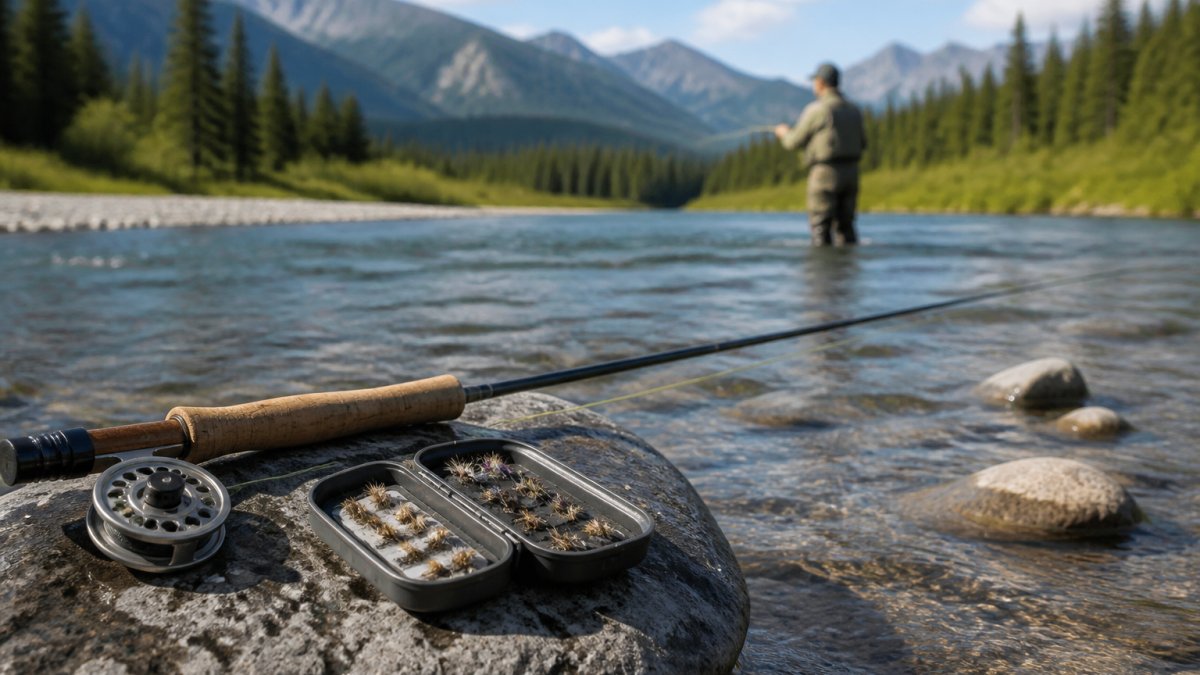
Beyond gear, stock a fly box with patterns matching what's actually hatching. Don't bring 200 flies, bring 20 that work.
Finally, bring polarized sunglasses. You cannot read river currents or spot fish without them. Good optics are non-negotiable.
Understanding Seasonal Changes and Water Temperature
Seasonal shifts drive fish behavior, and water temperature controls feeding patterns, insect emergence, and where trout hold.
In early summer, snowmelt keeps water cold and turbid, and fish feed aggressively on larger patterns.
Fall brings cooler water and active feeding throughout the day, when many anglers see catch rates spike.
Water temperature directly affects trout metabolism: a trout in 8-degree Celsius water won't chase a fly far; the same fish in 12-degree water will. This helps you choose the right fly and retrieve speed.
Check water temperature before you fish. If it's above 16 degrees Celsius, fish are stressed. Early morning and dusk become critical. If it's below 10 degrees Celsius, fish are sluggish. Slow your presentation and fish deeper.
Reading River Currents for Better Fly Presentation
Reading currents separates consistent anglers from those who cast randomly. Every river has zones where trout hold and feed; find them.
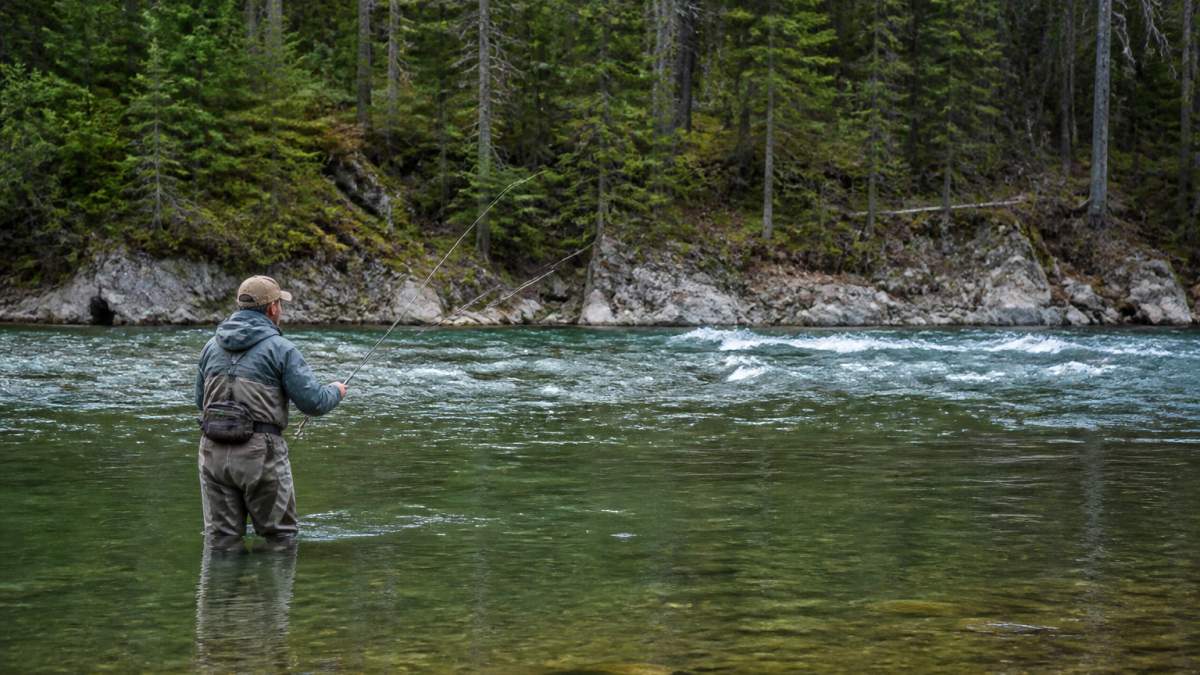
Look for seams. A seam is where fast water meets slow water.
Slower water near the bank is often overlooked.
Rapids and fast water are not dead zones. They're feeding stations. Fish hold in the slower water between rocks within the rapids.
The key to reading currents is asking one question: where would a trout rest and feed with minimal effort? That's where you cast.
How to Choose a Fly for Trout
Choosing the right fly for trout starts with matching the hatch. That answer changes by month, river type, and water clarity, so consistent anglers carry a small, deliberate box and rotate through it based on what the water tells them.
Match the fly to the season and the water
In early summer, snowmelt keeps many rivers cold and turbid. Stonefly nymphs in size 8 to 12, in black and brown, are the workhorse. As flows drop and water clears through July and August, mayfly hatches dominate and small dry flies in size 16 to 20 become necessary. Caddisflies emerge in late summer; fish them as dry flies or soft hackles.
Water clarity changes the rule. In stained or high water, go bigger, darker, and flashier; a size 10 black stonefly nymph or dark streamer beats a size 18 mayfly that disappears in the murk.
Read the water to pick the fly type
Turn over rocks in the riffle and match the size and color of the nymphs underneath. If insects are on the surface, match those; if nothing is hatching, fish nymphs deep. Three fly types cover most situations:
- Nymphs work year-round and in all water conditions. Fish them under an indicator or on a tight line. They account for the large majority of a trout's diet.
- Dry flies work when you see insects on the water. They are exciting to fish and give you visual confirmation of strikes.
- Streamers imitate small fish and sculpins. Use them in fast water, high or off-color water, or low-light conditions to trigger aggressive strikes.
Start with nymphs, forgiving and effective. Once you see what is hatching, adjust your dry fly selection. Save streamers for when nothing else works or you need to cover water fast.
Rigging specifics that change catch rate
Rigging matters as much as fly choice. For nymphing under an indicator, set the indicator so the fly drifts 6 inches to a foot off the bottom, and add split shot above the knot. Use a 9-foot leader tapered to 4X or 5X, stepping down to 6X in clear, low water.
A simple rotation rule: fish three different flies in 10 minutes each before changing water. If you are not getting strikes or refusals, change size first, then color, then depth. Most anglers change too slowly and fish the same pattern for 30 minutes hoping it works.
Fly Fishing Casting Tips to Improve Your Presentation
Your casting determines whether your fly lands where trout feed or far off target.
The basic cast is simple: load the rod on the backcast, accelerate forward, and stop.
Distance matters less than accuracy. A cast placed perfectly beats a cast placed poorly.
False casting wastes energy and puts fish down. Cast once, let the fly drift, then pick up and cast again.
The presentation cast needs accuracy and control, not power.
Practice on grass before you fish. Spend an hour casting to targets. Your muscle memory will improve faster on land than on water.
How to Mend a Fly Fishing Line for Natural Drift
Mending is the most underrated skill in fly fishing.
Mend immediately after your fly lands. Roll your wrist upstream to move the line.
Timing is crucial: mend too early and the fly hasn't sunk, too late and drag has already started.
In fast water, you'll mend multiple times during a single drift. That's normal. Each mend extends the drag-free drift.
Mending works in both directions. Upstream mends give slack. Downstream mends tighten your line when you need control. Learn both.
The goal is a natural drift that looks like an insect floating with the current, not being dragged by a line.
Troubleshooting Missed Strikes and Low Catch Rates
If you're casting well but not catching fish, something in your presentation is wrong. Don't fish harder; diagnose in sequence. Most low-catch days trace back to one of these five issues.
1. Are you getting strikes at all?
If you are getting no strikes, the problem is fly selection, depth, or location, not hook setting. Fish three different patterns in 10 minutes each. Change size first (smaller in clear water, bigger in stained water), then color, then depth. If you still get nothing, move to different water; slower water behind rocks and along banks holds more fish than fast, white water.
2. Are you getting strikes but missing fish?
Missed strikes usually mean a slow hook set or a dragging drift. Set immediately on every take; a half-second delay is the difference between a hooked fish and a miss. If you're missing fish consistently, check for drag: a fly pulled unnaturally across the current gets refused or spit quickly. Mend right after the fly lands and whenever the line tightens.
3. Is your fly at the right depth?
Nymphs need to be near the bottom where trout feed. If you are fishing on a tight line, add weight or extend your leader. If you are fishing under an indicator, adjust the depth until your fly is 6 inches to a foot off the bottom. A common mistake is fishing too shallow; trout hold close to the bottom in most conditions, and a fly drifting a foot above them goes unnoticed.
4. Is your tippet and hook in good shape?
Frayed or kinked tippet breaks on the strike. Replace it every few fish or after any snag. A dull hook point bounces off fish; replace flies after a few fish or if they look worn. Fresh tippet and sharp hooks are cheap insurance and convert more strikes into hooked fish.
5. Are you measuring what you change?
Catch-rate improvement is a learning loop, not a single fix. Keep a simple log: date, water temperature, time of day, location type, fly pattern and size, presentation, and number of strikes and fish landed. After three to five trips, patterns emerge. Without a log, you repeat mistakes and credit the wrong variable.
Common Mistakes to Avoid
Most fly anglers sabotage their own success without realizing it.
Casting too far is another trap.
Ignoring water temperature costs you fish: too warm and they aren't feeding, too cold and they're lethargic.
Not keeping records means you repeat mistakes. Write down what worked; after five trips, patterns emerge.
Using old, dull flies wastes casts. A dull hook point bounces off fish.
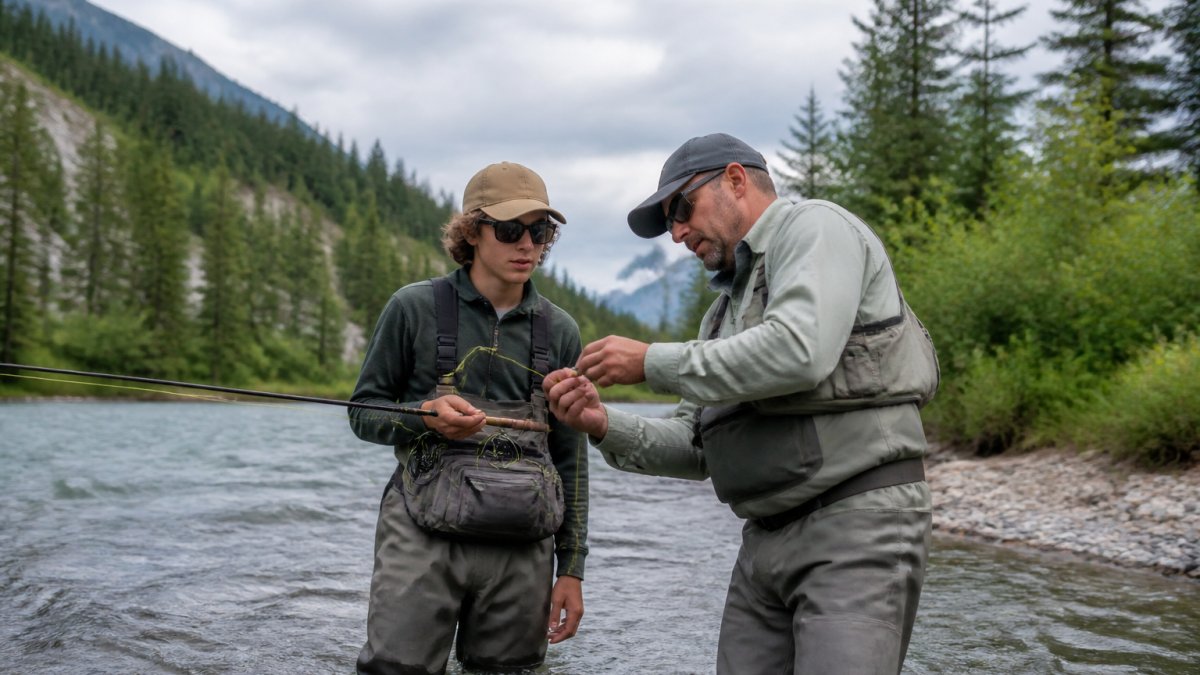
Finally, fishing alone when you're learning slows your progress. Fish with someone better.
At River People Guides, we work with anglers of all skill levels to accelerate this learning curve.
Frequently Asked Questions
How can I improve my fly fishing catch rate most quickly?
Focus on three fundamentals: match your fly to current insect activity, position yourself to read river currents and place your fly in feeding zones, and practice your casting to achieve a drag-free drift. Start by observing what trout are feeding on; watch the water surface for rises or look for nymphs in the current. Most beginners improve fastest by fixing their casting mechanics and fly selection before investing in expensive gear. Seasonal timing matters too; fish during cooler parts of the day and adjust your approach as water temperature changes through the year.
What is the best fly for trout in rivers?
The best fly depends on the season and current insect activity. Early in the year, use darker nymphs like Pheasant Tail or Hare's Ear in sizes 14-18. As water warms, match local hatches with dry flies like Adams or Elk Hair Caddis. In summer, streamers work well during low-light periods. The key is observing what trout are actually feeding on; check the water surface for rises or sample insects from the river. Carry a range of sizes and patterns so you can adjust quickly when fish stop taking your fly. Local guides can show you which flies work best on specific stretches.
How do you read river currents to find where trout feed?
Trout position themselves where they can feed with minimal effort. Look for seams where faster current meets slower water; trout hold just inside the slower zone to intercept food drifting past. Around rocks and structure, the water breaks into pockets of calm water behind the obstacle; trout hide there. Watch for current lines that collect floating insects. Deeper, slower runs hold fish during the day; shallower, faster water becomes productive in early morning and evening when light is low. Understanding flow rates and water depth helps you predict where fish will be without casting randomly.
Why am I missing strikes and what should I change?
Missed strikes usually stem from slack line, improper hook sets, or flies that don't match what fish are eating. Keep your line tight and maintain contact with your fly at all times; a tight line lets you feel and set the hook instantly. If you're missing strikes consistently, try a smaller fly, as trout often reject oversized patterns. Check if fish are feeding on the surface (dry flies) or underwater (nymphs or streamers). If nothing works, move to a different location or return during cooler hours when trout feed more aggressively. Sometimes changing your fly pattern triggers strikes that your current choice couldn't produce.