 How-to
5 Ways to Find Current Alberta Fishing Closure Updates
Last Updated: November 26, 2026
Quick Summary
The fastest way to find current fishing closure updates in Alberta is through the official Government of Alberta fishing regulations resources, including the interactive regulations map. Check them before every trip, because closures can be added or lifted with little warning.
- Use the official Government of Alberta regulations pages and interactive map for closures, advisories and corrections.
- Read the boundary, dates and affected activities, since a closure may cover only certain methods.
- Confirm the notice date matches today, and treat undated notices as unverified.
- When sources conflict, trust the official government notice over forum posts or old printed guides.
- Re-check on the morning you fish, and screenshot the notice in case you lose signal.
Table of Contents
- Where can I find current Alberta fishing closure updates?
- Telling a Closure Apart From an Advisory, Correction or Seasonal Rule
- Alberta fishing advisories, corrections and closures: where each notice lives
- Using the Alberta fishing closure map step by step
- Checking fishing regulations by lake and river
- Confirming a notice is current and handling conflicting information
- Your pre-trip check before you book a guided river day
- Frequently Asked Questions
Where can I find current Alberta fishing closure updates?
The fastest way to find current Alberta fishing closure updates is through the official Government of Alberta fishing regulations resources, which publish closures, advisories and corrections alongside the regulations themselves. Check these sources before every trip, because closures can be added or lifted with little warning.
Many anglers rely on old printed guides or forum posts, and those can be out of date within days. A common mistake is trusting a closure notice you saw months ago. Always check the live source the day you fish.
At River People Guides, we tell every client to start with the official government channels and then confirm with a local shop or guide. Our guides spend their days on these rivers, so they often hear about changing conditions early. Still, the official notice is the one that counts when you are on the water.
Telling a Closure Apart From an Advisory, Correction or Seasonal Rule
Not every notice means the water is closed, and misreading one costs anglers either a wasted trip or a fine. A closure stops fishing in a specific waterbody or area. An advisory gives you information, such as a warning about conditions or a health concern, but it does not by itself close the water. A correction fixes an earlier error in the regulations. A seasonal rule applies during set dates every year.
Here is how to tell them apart, with the details that actually matter on the water:
- Closure: Fishing is not allowed in the named waterbody or area. The notice should name the boundary (for example, a stretch between two landmarks or a defined lake area), the dates, and which activities are affected. A closure can cover all fishing or only certain methods, so read the affected-activities line before assuming the whole lake is shut.
- Advisory: Read the notice for conditions or warnings, but check whether any closure applies too. An advisory on its own does not make fishing illegal, but it may recommend against eating certain fish or warn of low water. Treat it as information, not a ban.
- Correction: An update that changes or fixes a published rule. Corrections often carry a date and a reference to the original rule. If you printed or screenshotted the regulations earlier, a correction is the notice most likely to make your copy wrong.
- Seasonal rule: A standing rule tied to dates, such as the regulation year or a closed season for a species. Seasonal rules are predictable and appear in the regulations guide for the current year, not as a one-off notice.
Read the full notice, not just the headline. The boundary and the affected activities are usually listed in the details. A common pattern is a headline that says "closure" while the body limits it to a single method or a short date range.
When two notices touch the same water, the more restrictive one usually controls. If a seasonal rule allows fishing but a current closure names the same stretch, the closure wins. If a correction changes a limit that a seasonal rule set, the correction is the newer instruction. When in doubt, treat the stricter notice as the one to follow and confirm with the provincial Fish and Wildlife office before you fish.
Watch out: a notice that names a river without a clear boundary can be read two ways. Confirm the exact stretch, because a closure on one reach does not always close the whole river.
The four notice types differ in what they mean for your trip, so use this quick reference to tell them apart.
| Notice type | What it means | What to check |
|---|---|---|
| Closure | Fishing not allowed in the named area | Boundary, dates, affected activities |
| Advisory | Information or warning, not a ban by itself | Conditions, health warnings, any closure |
| Correction | Fixes or changes an earlier published rule | Date and the original rule it replaces |
| Seasonal rule | Standing rule tied to set dates | Regulations guide for the current year |
Alberta fishing advisories, corrections and closures: where each notice lives
Each type of notice is usually published in a different place, so know where to look.
- Current closures and advisories: The government's fishing regulations pages and the interactive regulations map.
- Corrections and updates: Published alongside the regulations, often with a date.
- Seasonal rules: Found in the regulations guide for the current year.
Bookmark the official regulations pages on your phone. That way you can check quickly from the riverbank.
Using the Alberta fishing closure map step by step
The interactive map is the most useful tool for finding notices by location. Follow these steps:
- Open the official Alberta fishing regulations map on your phone or computer.
- Search for your lake, river or region by name.
- Zoom in to your exact fishing spot.
- Click or tap the waterbody to view any active notices.
- Read the closure boundary, the dates and the affected activities.
- Screenshot the notice in case you lose signal on the water.
Make sure the notice date matches today. If you see an older notice, check whether a newer update has replaced it.
Watch out: Map boundaries can be drawn at a different scale than the river you expect. Confirm the exact stretch named in the notice before you wade in.
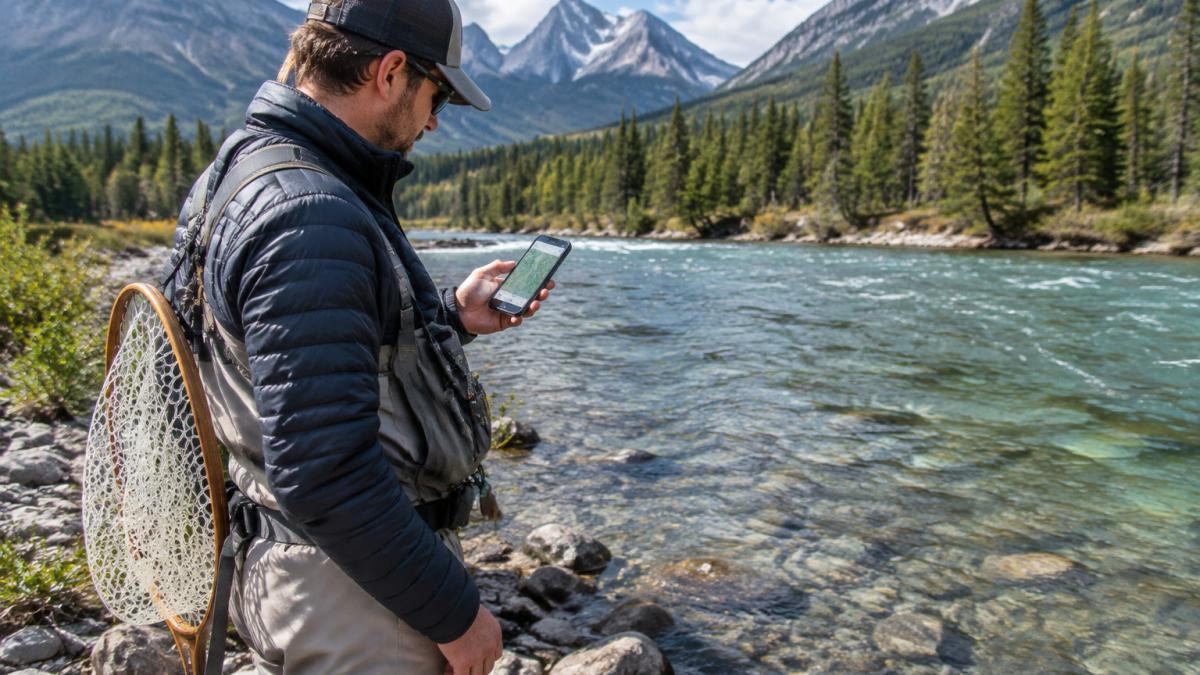
!Angler in waders standing beside a clear mountain river in Alberta, checking a phone screen for the day's fishing notices, soft morning light
Checking fishing regulations by lake and river
Regulations can differ by waterbody, so check the rules for each lake or river you plan to fish. Species limits, bait rules and gear restrictions may all vary.
- Look up the specific lake or river name, not just the region.
- Confirm the species you plan to catch and any size or catch limits.
- Check for bait or gear restrictions that apply to that water.
- Note any location-specific restrictions, such as protected stretches.
Planning around a particular river? Our Bow River hatch chart shows seasonal conditions that help you prepare before you head out. For the fish you may find in local waters, see 9 fish you can catch fly fishing near Calgary.
Confirming a notice is current and handling conflicting information
Closure updates can change quickly, so verify freshness before you commit to a trip. The results that rank for this topic point you to official pages but rarely explain how to tell whether what you are reading is today's notice or last season's. This is the step most anglers skip, and it is the one that decides whether your information is usable.
Run this freshness check every time:
- Find the notice date. Every official closure, advisory and correction should carry a date. Compare it with today, not with the date you last checked.
- Match it to the regulation year. Seasonal rules are published for a set regulation year. If a notice predates the current regulation year, look for a newer version before relying on it.
- Look for a later correction. A correction can override an earlier notice on the same water. Scan the corrections list for the waterbody name, not just the headline.
- Confirm on the official map. The interactive regulations map reflects the current published rules. If the map and a saved screenshot disagree, trust the map.
- Re-check on trip day. Conditions and closures can change within days. A check the night before is good; a check the morning you fish is better.
A simple way to keep this straight is to note three things for each water you plan to fish: the notice type, the notice date, and the regulation year it belongs to. If any of the three is missing or older than the current year, treat the notice as unverified until you confirm it on the official source.
When two sources disagree, trust the official government notice over a forum post, social media comment or an old printed guide. A common pattern is a shop or forum repeating a closure that was lifted weeks earlier, or missing a new one entirely. The official notice is the one that counts when you are on the water.
If the information is still unclear, call the provincial Fish and Wildlife office before you fish. Ask them to confirm the boundary, the dates and the affected activities for your exact waterbody, and note who you spoke with and when. That gives you a defensible record if an officer questions you later.
Watch out: a notice with no visible date is not proof of anything. Treat an undated notice as unverified and confirm it on the official map or with the office before you rely on it.
Your pre-trip check before you book a guided river day
Before you book a guided river day, run through a quick checklist:
- Confirm the waterbody is open on the official map today.
- Check for any new correction or advisory.
- Verify the species and gear rules for that water.
- Screenshot the notice for the day of your trip.
If your dates need to flex around a closure, you can plan a corporate or group fly fishing trip or book a guided trip with flexible dates. For a short guided outing, the Walk & Wade guided trip is a practical option to check.
Frequently Asked Questions
Where can I find current fishing closure updates?
Current closure notices are published by the Government of Alberta on its official fishing regulations pages and on the interactive fishing regulations map. Search by waterbody name, check the notice date and confirm the closure applies to your species and activity. Because notices change, look at the page on the day you plan to fish rather than relying on a saved screenshot or an older printed guide.
How do I check whether a specific lake or river is closed to fishing?
Open the Alberta fishing regulations map and search for the lake or river by name. Any closure, advisory or restriction for that waterbody will appear with its own notice. Read the boundaries carefully, since a closure may cover only part of a waterbody or certain species. If the map shows no notice, still check the regulations guide for that waterbody's season and gear rules before you fish.
How often should I check for fishing closure updates?
Check on the day you go, and again the evening before if your trip is planned days ahead. Closures and corrections can be added or lifted at short notice, especially after flooding, wildfire or a fish health concern. A notice you read a week earlier may no longer be accurate.
What should I do if a closure notice conflicts with the printed regulations guide?
Follow the most recent official notice, because corrections and closures are issued to update the printed guide. Note the date on the notice and the date on the guide, then confirm the wording on the provincial fishing regulations site. If the conflict is still unclear, contact the Fish and Wildlife office for the area before you fish.