 How-to
Best Fly Fishing Knots for Trout Anglers to Learn
Quick Summary
The best fly fishing knots for trout are the improved clinch knot for attaching most flies, the blood knot or surgeon's knot for joining tippet, and a non-slip loop knot for streamers. Choose by fly type and tippet size, and wet every knot before tightening it.
- Use an improved clinch for standard nymphs and dry flies on 4X to 6X tippet.
- Choose the Pitzen knot for fine 6X and 7X tippet and small flies.
- Use a non-slip loop knot so streamers and Woolly Buggers swing freely.
- Join tippet of similar thickness with a blood knot; use a surgeon's knot for quick changes.
- Tie each knot ten times at home and test with a firm pull before fishing.
Table of Contents
- Why Knot Choice Matters When Fishing for Trout
- Fly Fishing Knots for Beginners: Where to Start
- Best Knot for Tying a Fly to Tippet
- Surgeon's Knot for Joining Tippet and Connecting Line
- Blood Knot for Fly Fishing: Joining Tippet Sections
- Comparing Knot Strength and Choosing by Trout Situation
- Choosing Your Knots Before Your Next Trip to the River
- Frequently Asked Questions
Why Knot Choice Matters When Fishing for Trout
Your knot is the weakest link between you and a fish. A fly that lands perfectly means little if the connection fails on the first strong pull.
Fly fishing knots matter more than most new anglers expect. Trout rise to delicate presentations, so anglers often use thin tippet to fool them. Thin line is weaker, and a poor knot on thin material fails fast. A strong, well-tied connection protects both your fly and the fish you hope to land.
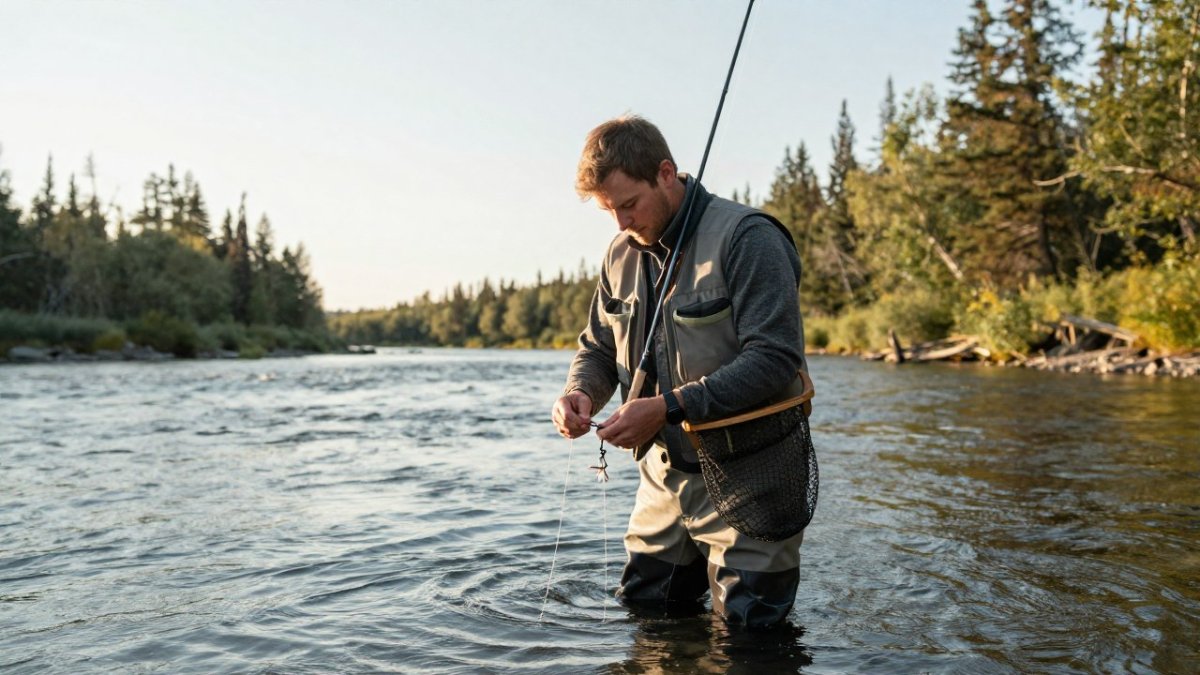
Knots also save time on the water. A knot you can tie quickly means you spend more minutes fishing and fewer minutes fumbling with line. The best knots are the ones you can tie reliably, even with cold fingers and a fish rising in front of you.
Fly Fishing Knots for Beginners: Where to Start
If you are new to fly fishing, start with a small group of knots rather than trying to learn everything at once. Most trout setups need only three types of connection: attaching the fly, joining tippet sections, and connecting the leader to the fly line.
Focus on these basics first:
- Fly attachment: A clinch-style knot for tying on your fly
- Tippet joins: A blood knot or surgeon's knot for connecting two pieces of line
- Leader connection: A loop or surgeon's knot for joining leader to fly line
Practice each knot at home before you go to the river. Tie it ten times in a row until your hands know the steps. Then test each knot by pulling it firmly to check whether it holds. A knot that works in your living room may still slip on the water, so always wet the line before you pull.
Watch out: a knot that is not fully tightened can slip under a strong pull. Always seat the coils snugly and trim the tag end close.
Best Knot for Tying a Fly to Tippet
Tying a fly to tippet is the connection you will make most often, so it deserves more than one option. The right knot depends on tippet diameter, fly size, and how much speed you need on the water. For trout, three knots cover almost every situation: the improved clinch, the Pitzen (also called the Eugene bend or 16/20 knot), and a non-slip loop knot for streamers and large dries.
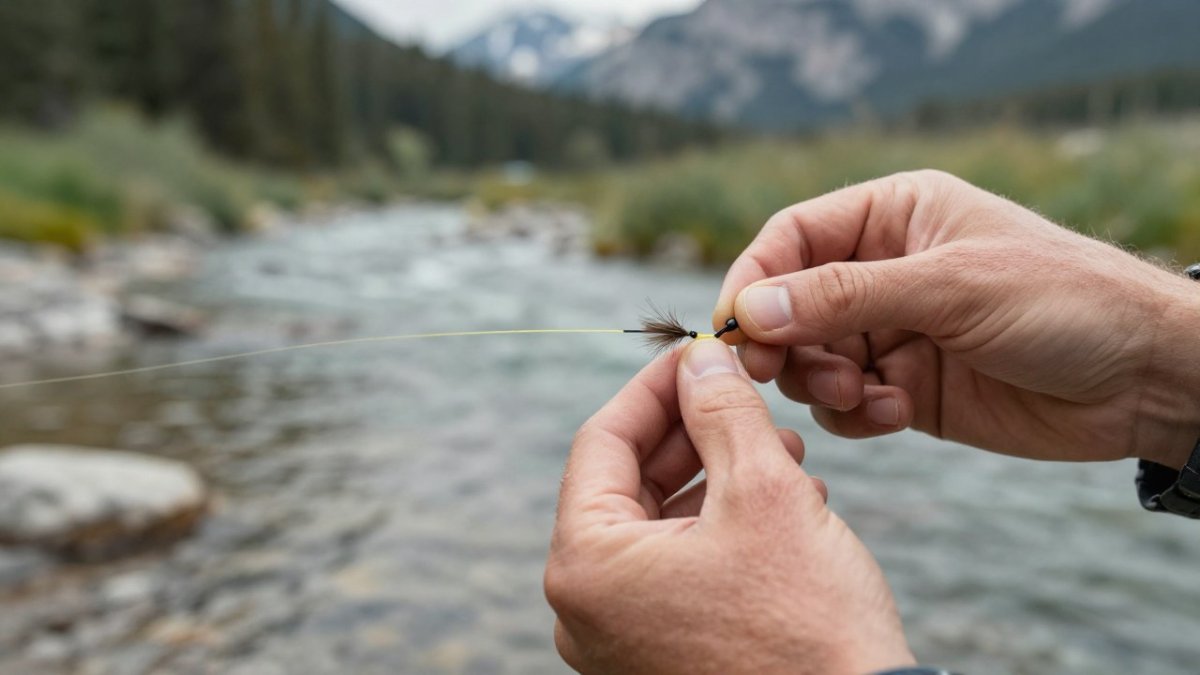
Improved clinch knot, the default for most trout anglers working with 4X to 6X tippet and standard nymphs or dries.
- Pass the tippet through the hook eye, leaving a tag end about six inches long.
- Wrap the tag end around the standing line five to seven times. Five turns suit heavier tippet; six or seven suit thin 6X and 7X.
- Pass the tag end through the small loop that formed just above the eye.
- Pass the tag end through the large loop you just created.
- Wet the knot with saliva or river water, then tighten slowly by pulling the standing line and tag end in opposite directions. Trim the tag close.
Watch out: pulling an improved clinch tight while dry creates friction that weakens nylon and fluorocarbon. Wet it first, and tighten by pulling the standing line, not the tag, so the coils seat evenly against the eye.
Pitzen knot, a strong choice for fine tippet (6X and 7X) and small flies, where the improved clinch can slip if the coils are not perfect.
- Pass the tippet through the eye and bring the tag back parallel to the standing line, forming a loop.
- Wrap the tag end around the standing line and through the loop four to six times, working back toward the eye.
- Pass the tag through the loop near the eye, wet, and tighten by pulling the standing line. Trim.
Non-slip loop knot, use this when you want the fly to swing freely, such as with streamers, Woolly Buggers, and large dry flies. The open loop gives the fly more action than a snug clinch.
- Tie a loose overhand knot in the tippet about four inches from the tag end.
- Pass the tag through the hook eye.
- Bring the tag back through the overhand knot, then wrap it around the standing line four to five times.
- Pass the tag back through the overhand knot, wet, and tighten by pulling the standing line while holding the hook. Trim.
For trout, match the knot to the fly: improved clinch for nymphs and small dries, Pitzen for 6X and 7X tippet, and a non-slip loop for streamers and anything you want to move naturally. Whichever you choose, tie it ten times at home until your hands know the sequence, then test each one with a firm pull before you cast.
Surgeon's Knot for Joining Tippet and Connecting Line
The surgeon's knot is quick to tie and works well when you need to join two lines of similar thickness. It is useful for connecting tippet to a leader or joining a leader to a fly line.
To tie it, overlap the two lines and make a single overhand knot with both lines together. Then tie a second overhand knot, and pull both ends to tighten. The double pass gives the connection extra grip.
Many anglers like the surgeon's knot because it is easy to tie in low light. It also tends to pass through the guides smoothly. When you join lines of very different diameters, though, a blood knot often holds better. A sound knot keeps the leader secure, while identifying authentic fly patterns helps ensure the fly at its end is the right match for the water.
Blood Knot for Fly Fishing: Joining Tippet Sections
The blood knot is the classic choice for joining two tippet sections of similar diameter. It creates a strong, compact connection that suits thin material well.
Here is the basic method:
- Overlap two tippet pieces about six inches apart.
- Wrap one tag end around the other line four to five times.
- Pass the tag back through the center gap between the two lines.
- Repeat with the second tag end, wrapping in the opposite direction.
- Pull both standing lines to seat the coils, then trim the tags.
A blood knot takes more time than a surgeon's knot, so practice it before you need it. When tied well, it holds strongly and rarely slips. Keep the coils neat and evenly spaced, because crossed or uneven turns weaken the connection.
Comparing Knot Strength and Choosing by Trout Situation
Knot strength is not a single number. It depends on the knot pattern, the line material, the tippet diameter, and how carefully the knot is seated. Rather than chase a universal ranking, use a decision guide built around the four trout-fishing situations you will actually face.
Dry flies in clear, slow water. Presentation matters most, so use the thinnest tippet you can get away with, often 5X to 7X, and a low-profile knot. The improved clinch and Pitzen both seat compactly and cast softly.
Nymph rigs with multiple flies. You need strong joins that hold under repeated tension and abrasion. Use a blood knot or surgeon's knot to build the tippet sections, then attach each fly with an improved clinch or Pitzen.
Streamers and larger trout. The fly needs action and the connection needs maximum strength. Use a non-slip loop knot for the fly so it swings freely, and step up to heavier tippet, 2X to 0X, with an improved clinch or a loop connection at the leader. Fluorocarbon is stiffer and harder to seat; wet every knot and tighten slowly.
Changing tippet on the water. Speed and reliability matter when trout are rising and light is fading. The surgeon's knot is the fastest tippet join and works well in low light or with cold hands; the blood knot is slower but more compact and stronger on thin material. Carry pre-tied tippet sections or a tippet ring so you can swap a whole section rather than retie a join.
Material compatibility. Nylon monofilament is more forgiving, stretches under load, and is easier to knot; it suits beginners and dry-fly work. Fluorocarbon is denser, sinks faster, is less visible underwater, and resists abrasion, but it is stiffer, harder to seat, and less forgiving of crossed wraps. Thin tippet, 6X and 7X, magnifies every error: a dry-tightened knot or a single crossed wrap can cut strength sharply.
Common failure points to check. Crossed wraps, insufficient lubrication, a knot tightened before the coils seat, and tag ends trimmed too close all cause failures. After tying, look for evenly spaced coils, a snug seat against the eye or join, and a tag end long enough to trim cleanly.
The right knot depends on the situation, so this quick guide matches each common trout scenario to a knot and tippet choice.
| Situation | Suggested knot | Tippet note |
|---|---|---|
| Dry flies in clear, slow water | Improved clinch or Pitzen | Thinnest tippet, often 5X to 7X |
| Nymph rigs with multiple flies | Blood or surgeon's knot to join, clinch to attach | Keep tag ends short |
| Streamers and larger trout | Non-slip loop knot | Heavier tippet, 2X to 0X |
| Changing tippet on the water | Surgeon's knot (fast) or blood knot (stronger) | Carry pre-tied sections or a tippet ring |
Choosing Your Knots Before Your Next Trip to the River
Before you head out, pick your core set: one fly attachment knot, one tippet join, and one leader connection. Practice them at home, then pack a few spare tippet sections in case you need to retie.
If you are still building skills, a casting clinic or guided trip can speed up your progress. Private fly fishing instruction lets you learn knot-tying hands-on with a coach who can correct your technique in person. Browse accessible fly options for beginners to try out your new knot skills on the water. Guided fishing trips and casting clinics can show you these knots on the water and help you get comfortable with them. book a guided trip or explore beginner fly rods to pair your new knot skills with the right gear.
Frequently Asked Questions
What are the best knots for fly fishing for trout?
The knots most anglers learn first for trout are the Improved Clinch Knot for attaching a fly, the Surgeon's Knot for joining tippet sections or connecting line to leader, and the Blood Knot for joining two tippet pieces of similar diameter. The Orvis Tippet Knot is a low-profile option for smaller tippets, and the Davy Knot is a useful alternative when tying on a fly quickly. Learn a small set well before adding more, because a reliable knot you can tie in cold hands matters more than a long list of options.
What knot should I use to tie a fly to a tippet?
The Improved Clinch Knot is the most common choice for tying a fly to tippet. It is quick to tie, holds well on most trout flies, and is easy to retie when you change patterns on the river. Wet the knot before tightening and seat it firmly so the coils stack neatly. Anglers fishing very fine tippet often prefer the Orvis Tippet Knot because it sits low and stays compact.
Is a surgeon's knot or blood knot better for fly fishing?
Neither is better in every case. The Surgeon's Knot is fast to tie and works well when joining tippet of noticeably different diameters or connecting line to leader. The Blood Knot creates a more compact join for tippet sections of similar diameter and is often preferred for longer leader builds. Tie both at home until you can finish either one in under a minute, then choose based on the materials in your rig.
How can I make sure my fly fishing knots do not slip?
Lubricate the knot with water or saliva before tightening, pull each coil snugly so the wraps stack evenly, and seat the knot by pulling the standing line and tag end gently. Trim tag ends close to the knot, and test the connection with a firm tug before casting. Knots tied in fluorocarbon or thin tippet need extra care, so check them more often and retie if you feel any slippage.