 how-to
How to Fish a Dry Dropper Rig in Fast Water
Last Updated: October 30, 2026
Quick Summary
A dry dropper rig is a two-fly setup with a buoyant dry fly on the leader and a weighted nymph tied a short distance below it. To fish it in fast water, match the dropper length and weight to the depth, cast short and upstream, and mend to keep a drag-free drift.
- Use a 12 to 18 inch dropper in shallow riffles under 2 feet deep.
- Extend the dropper to 18 to 24 inches for medium-depth runs of 2 to 4 feet.
- Use 3X to 4X tippet on the dropper section in fast water to resist breakage.
- Watch the leader entry point and dry fly hitches to detect takes in foam.
- Mend after each cast to keep both flies moving at the speed of the water.
Table of Contents
- What a Dry Dropper Rig Is and When Fast Water Calls for One
- Choosing the Dry Fly, Dropper Fly and Tippet for Turbulent Currents
- Dry Dropper Rig Setup: Attaching the Dropper and Setting Depth
- Dry Dropper Leader Length: Adjusting for Water Depth and Current Speed
- How to Fish Pocket Water with a Dry Dropper
- Mending a Dry Dropper Rig to Keep the Drift Dead Drag-Free
- Your Next Trip: Booking a Guided Fast-Water Session
- Frequently Asked Questions
Fast water punishes sloppy rigs. One moment your dry fly is riding high over a riffle, and the next it's been dragged under by the current or tangled with the dropper. A dry dropper rig fixes much of this, because the buoyant dry fly sits on the surface where you can see it while the weighted dropper works the feeding zone below.
What a Dry Dropper Rig Is and When Fast Water Calls for One
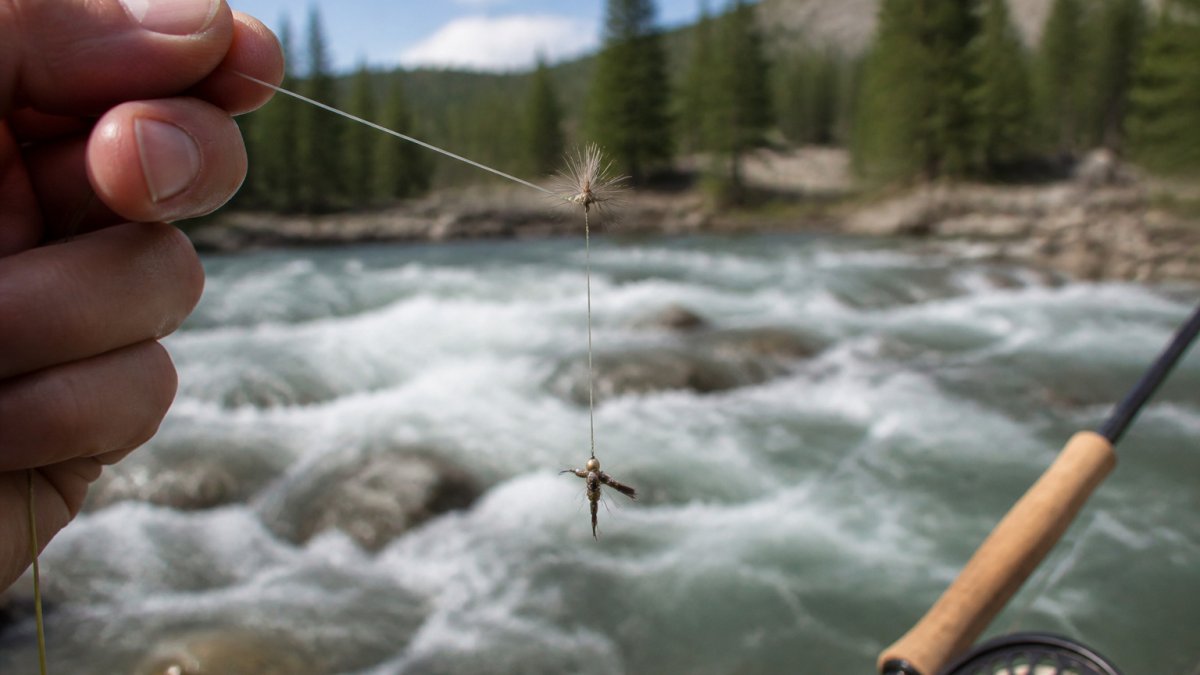
A dry dropper rig is a two-fly setup: a buoyant dry fly tied to the leader, with a subsurface dropper fly tied a short distance below it. The dry fly acts as the indicator. When it hesitates, dips, or moves sideways, something is probably happening below the surface.
Use a dry dropper when:
- The water is fast, broken, or turbulent and a single nymph is hard to track
- You need a visible strike indicator without adding a bulky foam bobber
- Fish are feeding subsurface but you still want to see the take
Watch out: Do not cast the rig like a single fly. The second fly will snag your leader if you rush the cast.
Choosing the Dry Fly, Dropper Fly and Tippet for Turbulent Currents
Pick a dry fly that floats well and stays visible in broken water. A bushy, high-floating pattern is easier to track than a sparse one. The dropper should be a weighted nymph that sinks quickly through the feeding lane.
Match your tippet to the fish and the water:
- Lighter tippet (5X to 6X) sinks less and presents flies more naturally, but breaks more easily in heavy current
- Heavier tippet (3X to 4X) handles fast water and snags better, at the cost of a little drift realism
- Tricolor sighter tippet can help you track the dropper and leader in turbulent water.
Dry Dropper Rig Setup: Attaching the Dropper and Setting Depth
Start with a leader built for indicator work. The setup has to change with the water in front of you; a rig that works in a shallow riffle will drag bottom in a deep chute and tangle in a boulder field.
Step-by-Step Rig Assembly
- Tie the dry fly to the end of the leader with an improved clinch knot or a non-slip mono loop.
- Cut a length of tippet for the dropper. Start with 18 inches and adjust from there.
- Attach it to the bend of the dry fly hook with an improved clinch knot, or tie it to the leader above the dry fly with a triple surgeon's knot if you prefer the dropper to hang from the leader rather than the hook.
- Tie the dropper fly to the other end of the dropper tippet.
- Test every knot with a firm pull before fishing. In fast water, a knot that slips under load costs you both flies.
Matching the Rig to Current Speed and Depth
Use these starting points, then adjust one variable at a time:
- Shallow, fast riffles (under 2 feet deep): Keep the dropper short, 12 to 18 inches, and use a lightly weighted nymph or a beadhead in the 2.5 to 3.5 mm range. A short dropper keeps the fly in the strike zone without dragging bottom.
- Medium-depth runs (2 to 4 feet): Extend the dropper to 18 to 24 inches and step up to a 3.5 to 4.5 mm beadhead. This is the most common fast-water setup and the one to master first.
- Deep, heavy current (4 feet and deeper): Go to a 24 to 36 inch dropper and a heavier nymph, 4.5 mm bead or a tungsten pattern. The extra weight gets the fly down quickly before the current sweeps it out of the lane.
Tippet Diameter and Dropper Behavior
The dropper tippet diameter affects both sink rate and tangling. A thinner tippet (5X to 6X) sinks more slowly and presents the nymph more naturally, but it also tangles more readily in turbulent air and water. A heavier tippet (3X to 4X) turns over better in wind, resists abrasion against rocks, and sinks the dropper faster, at the cost of a little realism.
Watch out: Overlong dropper tippet tangles in fast water. Keep it short, check it after every few casts, and re-tie if the tippet shows any nick or curl.
Dry Dropper Leader Length: Adjusting for Water Depth and Current Speed
Leader length controls how deep the dropper runs and how the rig turns over. A longer leader lets the dropper reach deeper water, but it is harder to cast and mend.
Use these starting points and adjust from there:
- Shallow, fast riffles: Keep the total leader short, around 7 to 9 feet, so the rig stays tight and manageable
- Deeper runs and pools: Extend to 9 to 10 feet to get the dropper into the feeding zone
- Heavy, boulder-strewn current: Shorten the dropper section to reduce snags
Adjust in small steps. Change one variable at a time and note what works. Your best setup in one run may differ from the next.
The leader length you choose depends on how deep the water is and how fast it runs.
| Water condition | Leader length | Note |
|---|---|---|
| Shallow, fast riffles | 7 to 9 feet | Keeps the rig tight and manageable |
| Deeper runs and pools | 9 to 10 feet | Gets the dropper into the feeding zone |
| Heavy, boulder-strewn current | Shorter dropper section | Reduces snags |
How to Fish Pocket Water with a Dry Dropper
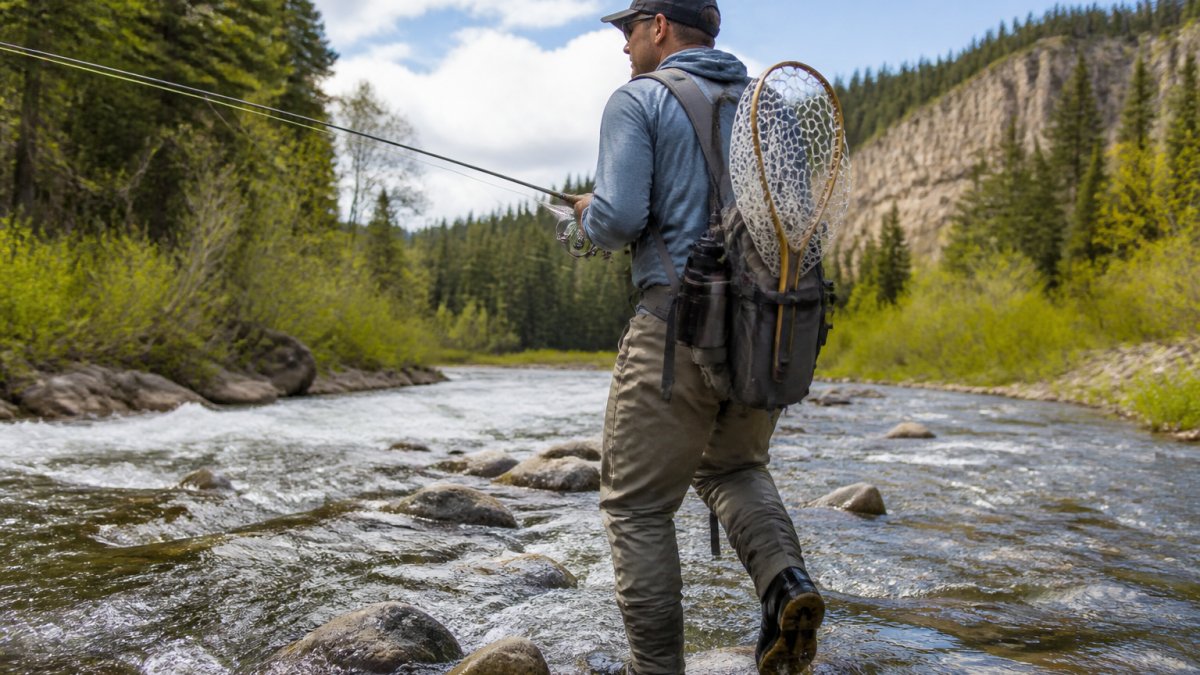
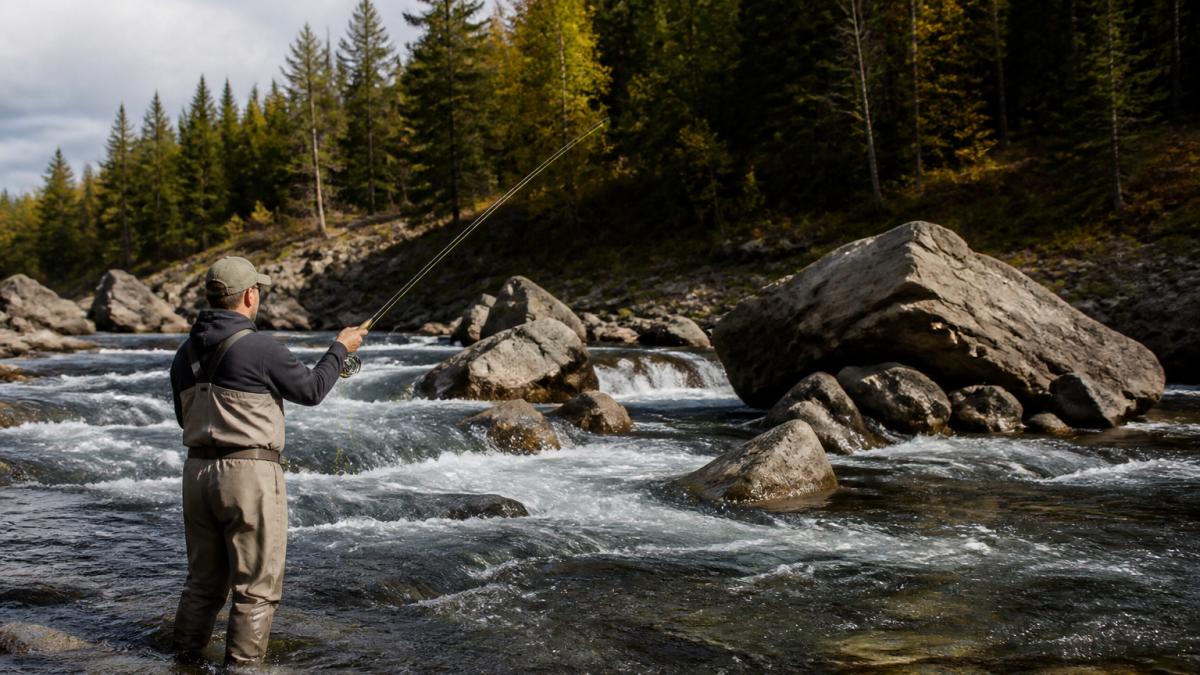
Pocket water is small, fast currents broken by rocks, where fish hold in the slack behind boulders. A dry dropper suits it well, but the drift needs care and the strike detection needs a system, because the dry fly is often the only thing you can see.
Reading the Pocket Before You Cast
Target the seams between fast and slow water. Fish often sit just behind a rock or at the edge of a foam line, waiting for food to drift past. Maintaining a delicate presentation in these turbulent pockets often requires careful consideration when choosing fishing line to ensure your flies drift naturally without being pulled off course by the heavy current.
Tracking the Dry Fly in Foam and Glare
In broken water, the dry fly disappears into white foam and glare for seconds at a time. Use these techniques to keep track of it:
- Watch the leader, not just the fly. The point where the leader enters the water often shows a take before the dry fly moves.
- Use a high-visibility dry fly. A pattern with a bright post, a foam body, or a light-colored wing is easier to track against dark rock and white foam than a natural-colored fly.
- Fish at closer range. In pocket water you rarely need a long cast. Staying within 15 to 25 feet keeps the dry fly large in your vision and reduces the amount of line you have to mend.
- Polarized sunglasses are not optional. They cut glare off the surface and let you see the fly and the fish's holding lie more clearly.
Strike Detection Cues
Keep the dry fly in view and watch for:
- A pause or hitch in the dry fly, which can signal a take on the dropper
- A sudden sideways drift, which often means the rig has caught current, or a fish has moved with the nymph
- The dry fly dipping under, which usually means a fish has taken it
- The dry fly skating unnaturally across the surface, which can mean a fish has taken the dropper and is pulling the rig
Set the hook when the dry fly moves unnaturally. Lift the rod smoothly and avoid a hard strike that can pull the dropper free. In fast water, a strip-set, a short, firm pull on the line with your line hand, often hooks fish more reliably than a rod-lift set, because it takes up slack instantly.
When You Cannot See the Fly
In heavy foam or low light, add a small yarn indicator above the dry fly, or switch to a dry fly with a brighter post. Some anglers use a dropper with a small beadhead in a bright color so the flash shows through the water when the dry fly is hidden. If you lose sight of the fly entirely, do not guess; recast and reposition so you have a clear view of the drift lane.
Mending a Dry Dropper Rig to Keep the Drift Dead Drag-Free
A drag-free drift keeps the dry fly and dropper moving naturally.
After each cast, lift the rod tip and flip a section of line upstream.
The goal is a dead drift, where both flies move at the speed of the surrounding water.
Watch out: Mending too hard can lift the dropper out of the feeding zone or pull the rig off the surface.
Your Next Trip: Booking a Guided Fast-Water Session
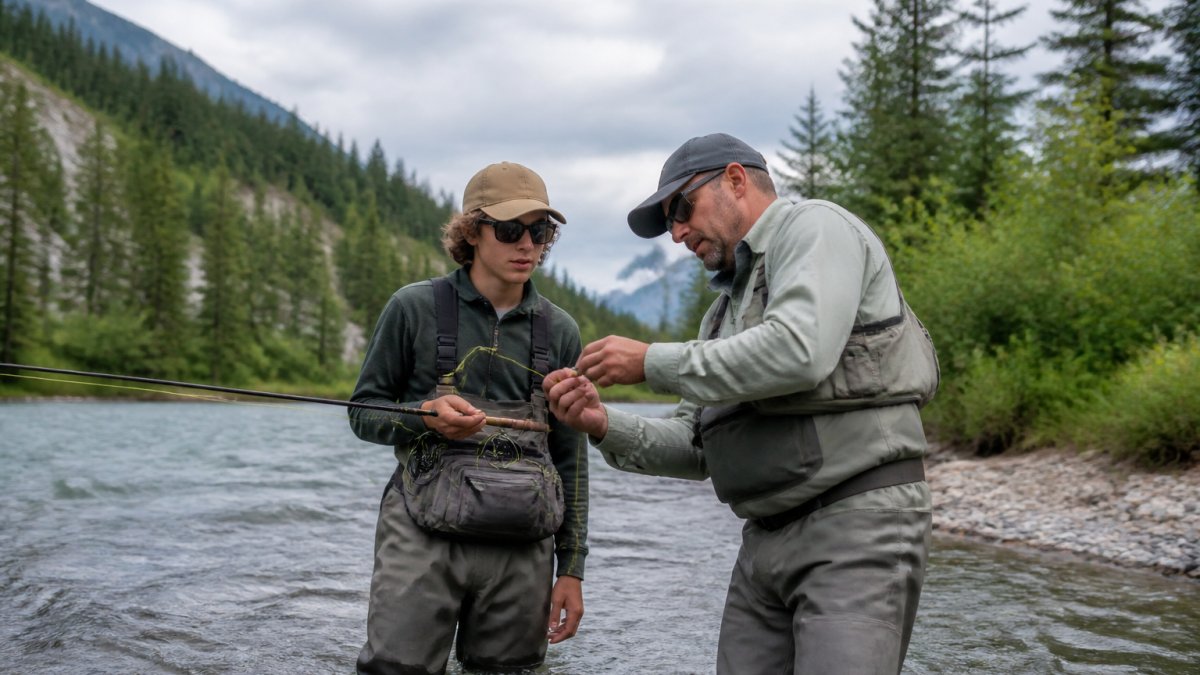
Reading fast water and setting up a dry dropper takes practice. If you want to learn the technique in person, a guided session with an experienced guide can help you build the skill on the water.
Frequently Asked Questions
How do you fish a dry-dropper rig in fast water?
Start by choosing a buoyant dry fly large enough to stay visible in the current, then tie the dropper nymph on a tippet section about 60 to 90 centimetres below it. Cast upstream and slightly across, letting the rig drift naturally through the seam and riffle. Keep your rod tip high and follow the drift with line control so the dry fly stays on top while the dropper sinks to the feeding zone. Watch the dry fly closely: a pause, dip or sideways movement usually signals a take, so set the hook on any unusual movement.
How far below the dry fly should the dropper hang?
In fast, shallow water, a dropper length of roughly 60 to 90 centimetres is a practical starting point, while deeper runs may call for slightly more. Shorter distances keep the nymph higher and reduce tangles, but they can fail to reach fish holding near the bottom. Adjust after a few drifts: if you are snagging, shorten the dropper, and if you are not getting depth, lengthen it. Using a light tippet helps the dropper sink without pulling the dry fly under.
How do you mend a dry-dropper rig without pulling the flies out of the drift?
Mend by lifting the rod tip and flicking the fly line upstream in a smooth motion, keeping the flies on the water. Make small mends rather than large ones, since big mends drag both flies across the current. In fast water, a quick upstream mend right after the cast often corrects the belly before the rig tightens. Keep the rod tip low enough that the dropper stays in the feeding lane, and avoid mending directly over the dry fly, which can sink it.
When should you switch from a dry-dropper rig to a different setup?
Consider changing rigs when the water is too deep or heavy for the dry fly to stay afloat, when you cannot see the dry fly well enough to detect strikes, or when the snags and tangles become constant. A heavier single nymph or a tandem setup may suit deep, slow runs better. If fish are rising to visible surface insects, a standalone dry fly may be more effective than a rig with a dropper.
Want to put this into practice? Book your next session with River People Guides today.