 blog
9 Floating Line vs Sink Tip Choices for Alberta Trout
Quick Summary
Floating line vs sink tip comes down to depth. A floating line stays on the surface and is easier to cast and mend, so it suits most Alberta trout fishing. A sink tip pulls your fly down to where trout hold, which matters for streamers and deep, fast water.
- A floating line wins on versatility and is easy to cast and mend.
- A sink tip wins when you need depth, such as deep pools and fast water.
- Use a 3 to 4 ips sink tip for most Alberta trout water.
- Sink tip leaders run 3 to 5 feet, shorter and stouter than floating-line leaders.
- Choose a floating line for summer low water and a sink tip when flows rise or water turns cold.
Table of Contents
- Floating Line vs Sink Tip: The Core Trade-Off on Alberta Rivers
- Comparison Table: Floating Line vs Sink Tip at a Glance
- Matching Line Type to Fishing Depth and Water Conditions
- Best Fly Line for Bow River Trout: Choosing Your Setup
- Streamer Fishing Techniques for Alberta Rivers
- Fly Fishing Leader Setup for Sink Tips
- Booking Your First Guided Trip to Test Your Setup
- Frequently Asked Questions
Floating Line vs Sink Tip: The Core Trade-Off on Alberta Rivers
Choosing between a floating line and a sink tip is the first real decision most Alberta trout anglers face. Get it right, and your fly sits where the fish are feeding. Get it wrong, and you spend the morning watching a streamer skim above the rocks.
Here is the core trade-off. A floating line stays on the surface, which makes it easy to cast, mend, and control. A sink tip adds a section of heavier line that pulls your fly down to the zone where trout hold. The floating line wins on versatility. The sink tip wins when you need depth.
Most Alberta rivers push you toward a floating line most of the time. Fish feed on insects near the surface for much of the season. Still, a sink tip earns its place when water runs deep and fast, or when you are swinging streamers along the bottom.
Watch out: a sink tip that sinks too fast snags on every rock in the run. Start with a moderate sink rate and adjust from there.
Comparison Table: Floating Line vs Sink Tip at a Glance
The table below sums up how each line type performs on Alberta trout water. Use it as a quick reference before you step into the river.
| Factor | Floating Line | Sink Tip |
|---|---|---|
| Best depth | Surface to mid-water | Mid-water to bottom |
| Casting ease | Easy, light to cast | Heavier, needs more effort |
| Mending | Simple and precise | Harder, sink tip drags |
| Strike detection | Clear, you see the take | Harder, you feel more than see |
| Best for | Dry flies, nymphs, shallow runs | Streamers, deep pools, fast water |
Pros of a floating line:
- Easy to cast and mend
- Easy to see strikes on the surface
- Works for most of the season
Cons of a floating line:
- Cannot reach deep fish
- Struggles in fast, deep water
Pros of a sink tip:
- Gets flies down to trout holding zones
- Strong option for streamers
Cons of a sink tip:
- Heavier to cast
- Harder to mend and detect strikes
Matching Line Type to Fishing Depth and Water Conditions
Depth is the first filter, but current speed and structure decide where the fish actually sit, and therefore which line gets your fly in front of them. For shallow and surface-oriented water, a SA Magnitude Smooth Infinity clear tip floating line keeps your fly where you need it. This is where a floating line and a sink tip part ways on real water.
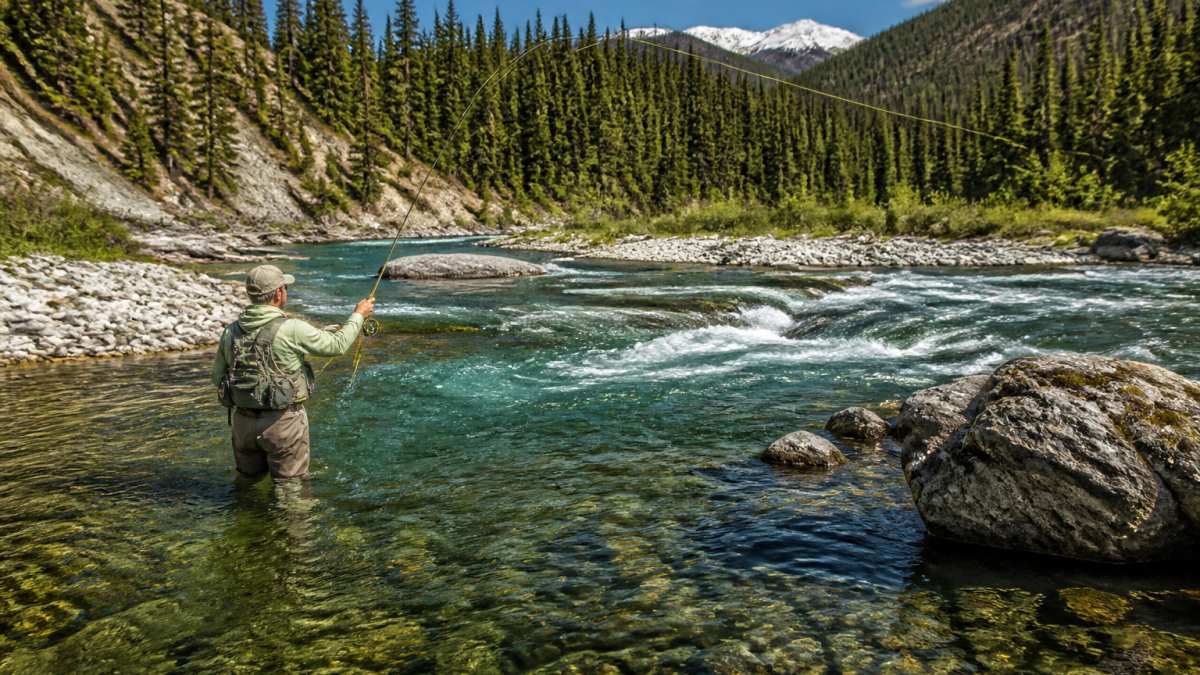
Read the seam before you rig. A seam is the line where fast water meets slow water. Trout hold on the slow side of a seam, facing into the current, waiting for food to wash over. A floating line fishes a seam at the surface and just below it, good for rising fish and shallow nymphing. A sink tip lets you fish the same seam at the depth where the bigger fish sit, especially where the slow side is deep. The key is to cast so the fly travels along the seam, not across it.
Drop-offs and buckets. A drop-off is a ledge where shallow water falls into deeper water. Trout stack at the bottom edge of the drop-off. A floating line with a weighted fly can reach the lip, but a sink tip gets the fly down the face and along the bottom edge where the fish are. Fish the fly down the drop-off, not across it.
Eddies. An eddy is a pocket of reverse current behind a rock or bank. Trout use eddies to rest and feed. A floating line fishes the foam line at the top of the eddy; a sink tip fishes the deeper water at the tail-out where food collects. Match the line to the part of the eddy you are fishing.
Flow stage changes the answer. In higher, colder flows, typical of spring runoff and late fall, trout hold tighter to structure and deeper water. That pushes you toward a sink tip or a heavier floating-line rig with weight. In summer low water, fish spread out and feed shallower, and a floating line covers more water. A common pattern on Alberta rivers is floating line for most of the summer and a sink tip when flows come up or water turns cold.
A simple on-water rule:
- Shallow riffles and slow tail-outs: floating line
- Mid-depth runs with moderate flow: floating line with a weighted fly, or a short intermediate tip
- Deep pools, drop-off faces, and fast seams: longer sink tip
Watch the fly, not just the water. If your streamer is skating up before it reaches the strike zone, you need more sink rate or a shorter, stiffer leader, not more casts.
Best Fly Line for Bow River Trout: Choosing Your Setup
The Bow River is a big, varied system, and no single line covers every stretch. A floating line handles most of the upper, shallower sections well, especially when trout feed on insects. As the river deepens and speeds up, a sink tip becomes the better choice.
Pick a line weight that matches your rod. A line that is too heavy for the rod spoils your casting, and one that is too light struggles with wind and weighted flies.
Streamer Fishing Techniques for Alberta Rivers
Streamers imitate small fish and imitate them well, so trout often strike hard. Streamer fishing usually calls for a sink tip because you want the fly moving near the bottom, where larger trout tend to wait. Delivering these bulky patterns into tight pockets behind submerged logs requires you to improve fly casting accuracy so the fly lands exactly where the current carries it past the predator.
Cast across and slightly downstream, then let the fly swing through the current. Strip it in short, uneven pulls. Trout often hit on the swing or as the fly starts to rise again.
Vary your retrieve until you find what works. Fast strips draw aggressive strikes. Slow, pausing retrieves suit colder water, when trout move less.
A common mistake is fishing a streamer too fast in cold water. Slow down, and give fish time to commit.
Fly Fishing Leader Setup for Sink Tips
A sink tip is only as good as the leader hanging off the end of it. The leader controls how deep the fly actually fishes, how the fly swims, and whether you can feel a take in heavy current. Get the leader wrong and your sink tip becomes a heavy floating line.
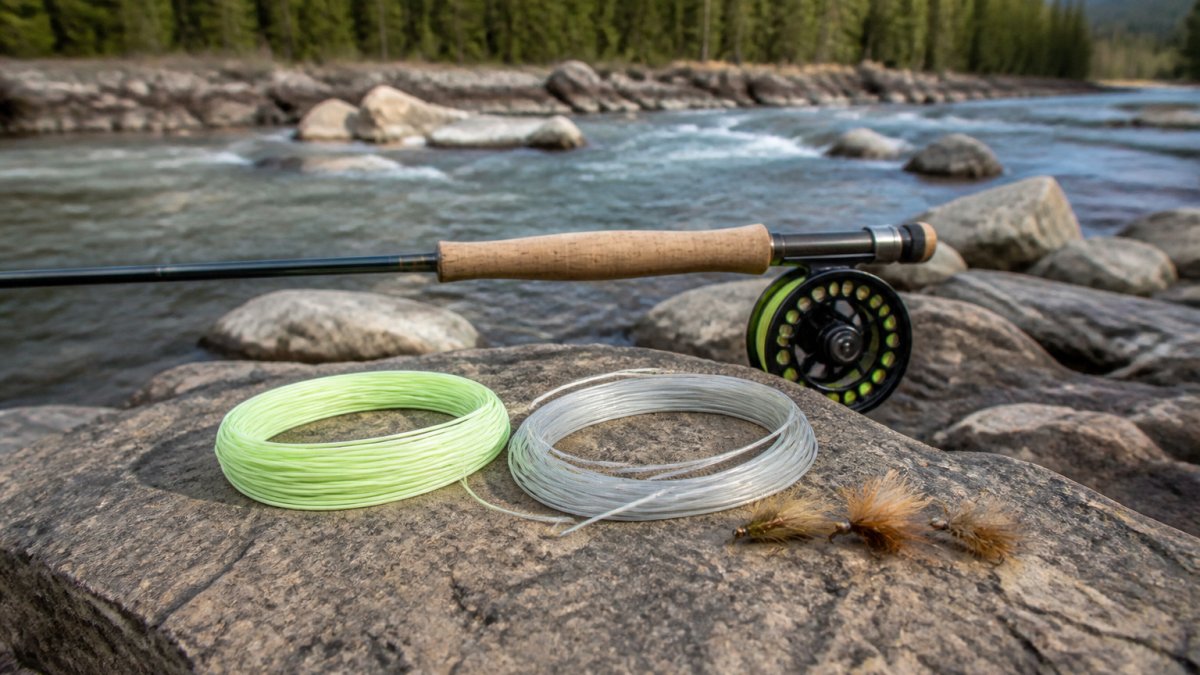
Start with the sink tip itself. Sink tips are rated by sink rate, usually expressed in inches per second (ips). A common range for trout rivers runs from about 1.5 ips (slow, shallow) up to 6 or 7 ips (fast, deep). For most Alberta trout water, a 3 to 4 ips tip covers the widest range of conditions. A faster tip snags more in rocky runs; a slower tip floats up in fast current before the fly reaches the strike zone.
Tip length matters as much as sink rate. Short tips (about 5 to 10 feet) are easier to cast and mend and suit smaller rivers and shallower runs. Longer tips (12 to 15 feet) reach deeper and hold the fly down longer in fast water, but they are harder to cast and harder to pick up off the water. A common pattern is to carry one short, fast tip for pocket water and one longer, moderate tip for big pools.
Leader formula for sink tips. The leader on a sink tip should be shorter and stouter than a floating-line leader. A typical setup is 3 to 5 feet of stiff monofilament or fluorocarbon, usually 0.024 to 0.030 inch diameter (roughly 12 to 20 lb test), tapered down to 0.010 to 0.012 inch (roughly 6 to 8 lb) at the tippet. The short, stiff butt turns over heavy streamers; the lighter tippet lets the fly swim. Skip the long, soft tapered leaders you use for dry flies, they hinge and kill depth.
Connection matters. Attach the leader to the sink tip with a loop-to-loop connection or a secure nail knot, and inspect it every few hours. A failed loop in fast water costs you the fly and the fish. Many anglers carry a spare pre-tied leader so a break does not end the drift.
Match leader to fly and flow. Heavier flies and faster water need a shorter, stronger leader. Lighter flies and slower water allow a slightly longer, finer leader. The goal is a straight connection from tip to fly with no slack that lets the fly rise.
Booking Your First Guided Trip to Test Your Setup
Reading about line types is useful, but nothing beats testing them on real water. If you want to see how a floating line and a sink tip behave on Alberta rivers, a guided trip gives you that chance with an experienced guide beside you.
Ready to put this into practice? book a guided trip with River People Guides and see how the right line changes your day on the water.
Frequently Asked Questions
When should I use a sink tip line instead of a floating line?
Use a sink tip when you need your fly near the bottom of deeper runs, pools and runs with moderate current, or when streamers need to sink quickly. A floating line is better when fish are feeding on or near the surface, or when you are fishing dry flies and shallow riffles. On most Alberta trout rivers, a floating line covers the majority of situations, and a sink tip becomes useful once you know the water is deep enough to hold fish below the surface. Switch lines based on what you see in the water, not on habit.
Is a floating line better for dry fly fishing on local rivers?
Yes. A floating line keeps the fly on the surface and lets you mend and control drift without pulling the fly under. For dry fly fishing in Alberta trout rivers, the floating line gives better presentation and easier strike detection because you can see the line and fly together. Use a longer, lighter leader for delicate presentations, and keep the line dry and clean so it floats high throughout the drift.
Can I use a sink tip line for nymphing in shallow water?
A sink tip is generally not the best choice for shallow nymphing. In shallow water, a full sinking or sink tip line can drag the fly too deep and pull it through the fish zone too quickly. For shallow nymphing, a floating line with a weighted fly or added split shot usually gives better control. Reserve sink tips for deeper pools and runs where the extra depth matters.
How long should the leader be when using a sink tip?
A common starting point is a shorter leader of roughly 6 to 9 feet tied to a sink tip, so the fly stays close to the line's sinking section. Keep the leader tippet light enough to present naturally but strong enough to handle trout in current. Adjust based on depth and sink rate: a faster-sinking tip or deeper water calls for a slightly shorter leader, while a slower sink rate in shallow runs allows a longer leader. Test your setup on the water and adjust as conditions change.