 How-to
7 Steps to Land Fish from a Drift Boat Without Losing Them
Last Updated: November 12, 2026
Quick Summary
To land fish from a drift boat, treat it as a two-person job: the angler tires the fish and brings it within net reach while the rower positions the boat so the fish comes head-first. The rower holds the net half-submerged and lets the fish's momentum carry it over the rim, and the angler lowers the rod tip to give slack at the net.
- Every angler in a drift boat should wear a personal flotation device, and knee locks keep you stable when standing.
- Strip line into a clear lane beside you, not at your feet, to avoid tangles that give fish slack.
- Set the hook with a smooth upward lift from the seat, not a big pull, and do not stand to add power.
- If a fish runs under the boat, lower the rod tip into the water on the opposite side instead of lifting over the gunwale.
- In fast water, never let the fish get downstream of the boat, where the current multiplies the pressure.
Table of Contents
- Why Landing Fish from a Drift Boat Is Different
- Safety First: Knee Locks, PFDs, and Boat Position
- How to Manage Fly Line in a Drift Boat
- Hooking and Fighting Fish from a Seated Position
- Netting and Landing: A Step-by-Step Sequence
- Best Fly Fishing Nets for Drift Boats
- Drift Boat Fly Fishing Etiquette for Anglers and Rowers
- Handling Fish Safely and Releasing Them Right
- Frequently Asked Questions
Why Landing Fish from a Drift Boat Is Different
To land fish from a drift boat is a team skill, not a solo one.
That changes everything about how you land fish. On foot, you can chase a fish downstream. In a drift boat, you cannot.
Here is the good news. A full day guided drift boat fly fishing trip lets you learn this hands-on with an expert guide.
Below, we break down the full sequence, from knee locks to release.
Safety First: Knee Locks, PFDs, and Boat Position
Safety gear comes before your fly rod. Every angler in a drift boat should wear a personal flotation device, and Knee locks or a standing brace keep you stable when you stand to cast or fight a fish.
Using Knee Locks for Stability
Knee locks brace your legs against the boat so you can stand without gripping the gunwale. Here is how to set them up:
- Adjust the brace height before you leave the boat ramp
- Stand with feet shoulder-width apart
- Press both knees gently into the locks, do not lock them rigid
- Keep your weight centered over the seat, not the rail
A common mistake is leaning out over the water to reach a fish. That is how people go in. Let the rower bring the fish to you.
Positioning the Boat for the Landing
The rower decides the landing angle. Good positioning means the fish comes to the net head-first, not broadside.
- Point the boat so the fish fights upstream of you
- Keep the current pushing the fish toward the net, not past it
- Angle the bow slightly downstream for a controlled drift
- Hold position with slow oar strokes, not sudden corrections
For a fuller look at river hazards and precautions, read our guide on staying safe fly fishing on Alberta rivers.
How to Manage Fly Line in a Drift Boat
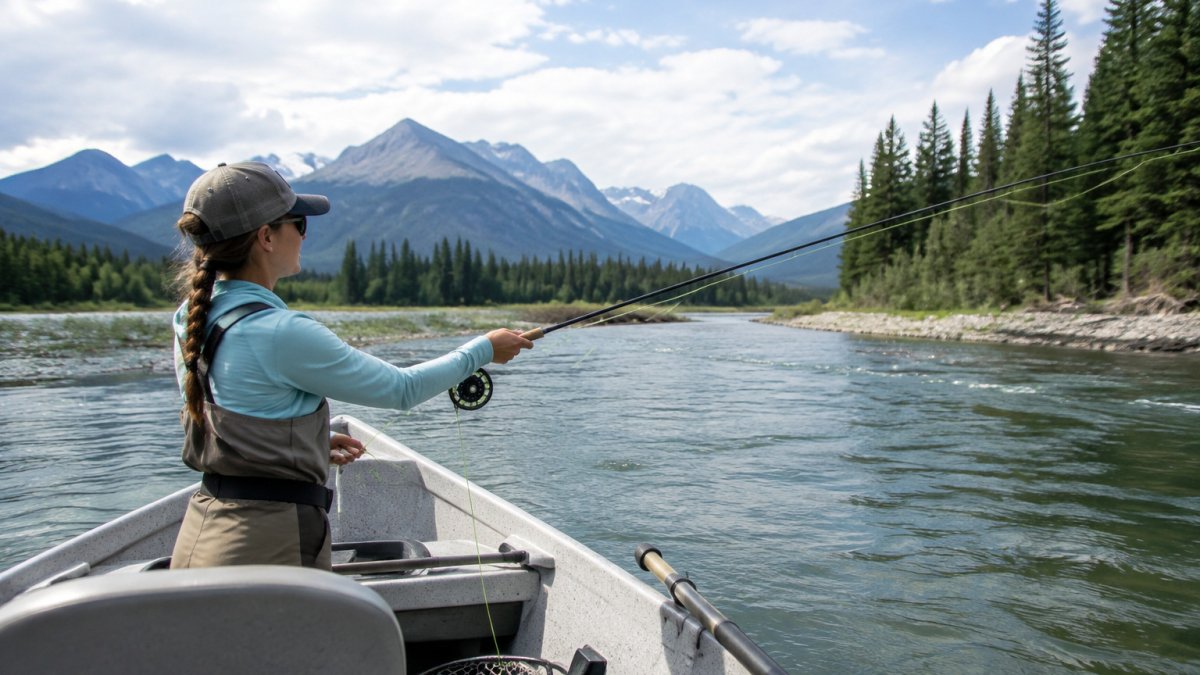
Line management is where most drift boat fish are lost. Loose line catches on seats, oars, and cleats, and every tangle gives the fish slack.
Strip line into a clear lane beside you, not at your feet. Keep the coils long and loose, and keep your rod tip high.
- Clear a stripping lane before you cast
- Strip in short, even pulls
- Keep the line wet and free of the boat floor
- Watch the current seam, the line drifts with it
Mending matters too. If you are new to casting from a moving boat, our article on how to cast a fly rod from a drift boat goes deeper on the mechanics.
Hooking and Fighting Fish from a Seated Position
A seated hook set is shorter and sharper than a wading hook set. You have less room to sweep the rod, so the hook set comes from a firm upward lift, not a big pull.
Set the hook with a smooth raise of the rod tip. Do not stand up to add power. Your seat and knee locks give you all the use you need.
The Hook Set from a Drift Boat
- Keep the rod low and pointed at the fly line
- Lift firmly when you feel weight
- Keep the rod tip up after the set
- Let the reel drag do the work
Fighting Fish While Seated
Fight the fish with the butt of the rod, not the tip. Keep the rod bent and the line tight, and let the fish run when it wants to.
A common mistake is pumping the rod too hard. That opens the hook hold. Smooth pressure lands more fish than force.
The rower is part of the fight, not a spectator.
Watch out: if the fish runs under the boat, do not try to lift it over the gunwale.
When the Hook Snags the Boat or a Passenger
This is the scenario most guides never cover, and it is the one that ends trips.
If a hook goes into a passenger, the priority is the person, not the fish. Cut the line above the hook, leave the hook in place, and get to shore.
Watch out: if a passenger goes overboard, the rower points the bow downstream and rows toward the swimmer, not upstream against the current. The angler keeps the swimmer in sight and throws anything that floats.
Emergency Protocols Worth Rehearsing
Before the boat leaves the ramp, agree on three things: who calls the overboard alarm, where the throw bag is stowed, and how the rower will approach a swimmer. Rehearse the throw on dry land once per season, a panicked throw is a short throw.
Watch out: in cold water, a swimmer loses grip strength fast. Maintaining this same level of composure is equally vital when you are managing the tension of a strike, a technique refined by the Independent Bait Company to ensure your hookset remains firm and effective even when the current is pulling against your rod tip.
Netting and Landing: A Step-by-Step Sequence
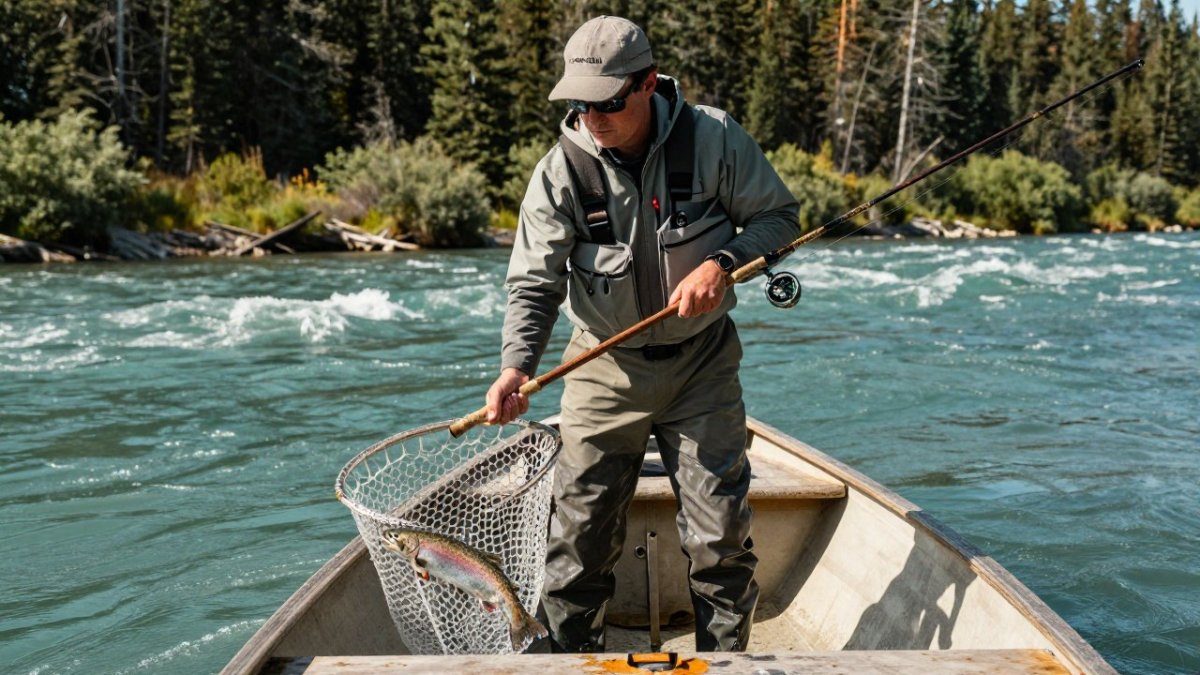
Netting is a two-person job, and timing decides the outcome. The angler brings the fish close, and the rower scoops with the landing net. Neither person rushes.
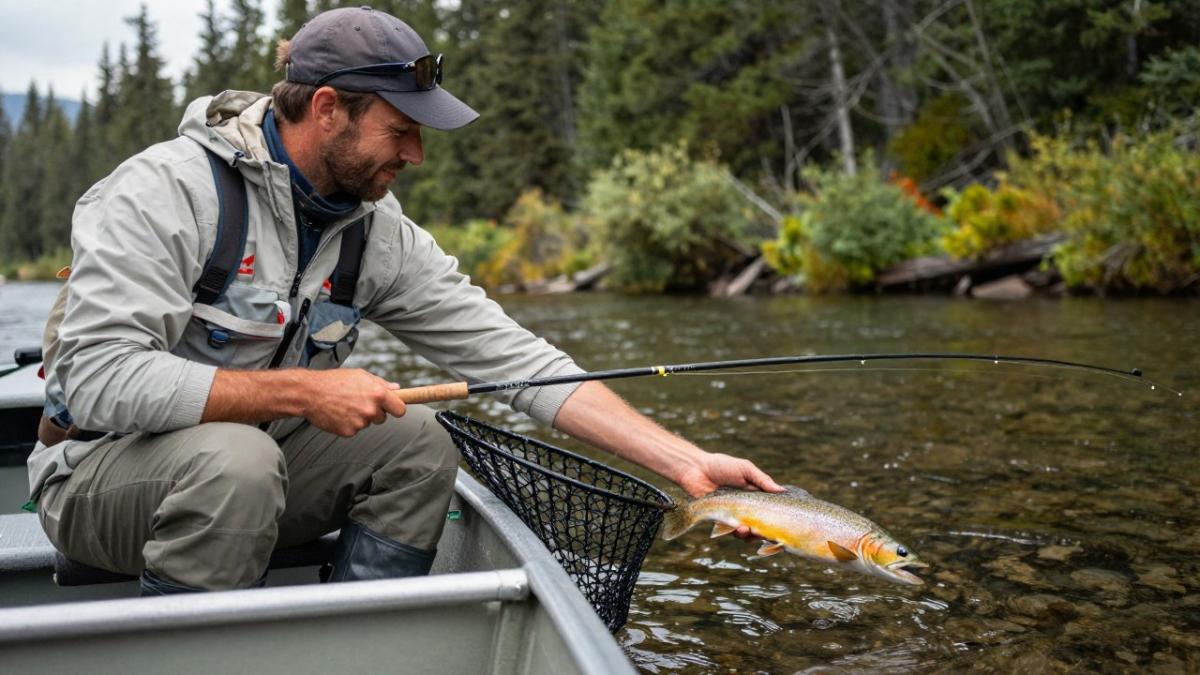
Here is the landing sequence we coach in the boat, in order.
| Step | Who | What to do |
|---|---|---|
| 1 | Angler | Tire the fish and bring it within net reach |
| 2 | Rower | Position the boat so the fish comes head-first |
| 3 | Rower | Lower the net into the water, do not stab |
| 4 | Angler | Guide the fish over the net rim |
| 5 | Rower | Lift the net straight up once fish is inside |
| 6 | Angler | Lower the rod tip to give slack at the net |
Best Fly Fishing Nets for Drift Boats
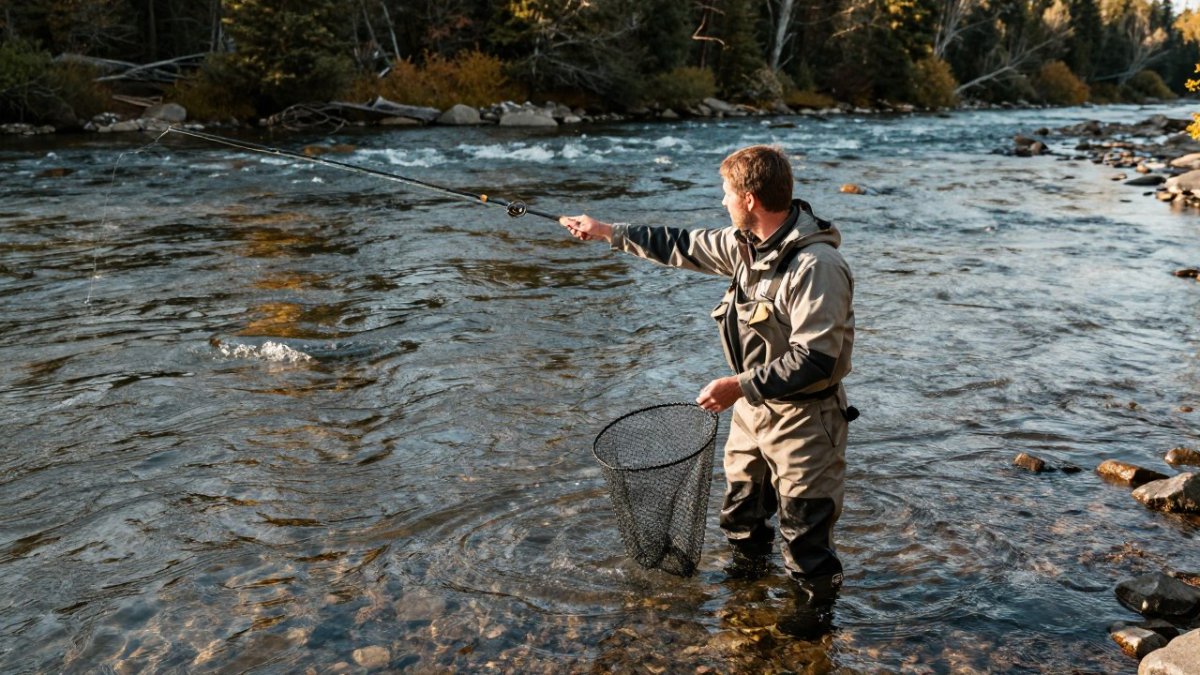
The best fly fishing net for a drift boat is a long-handled rubber or silicone net with a wide hoop and a secure release. Long handles reach fish without leaning over the rail, and rubber bags protect fish slime and reduce hook tangles.
Look for these features:
- Handle length long enough to reach past the oars
- Soft rubber or silicone bag, never knotted nylon
- Wide hoop for easy scooping
- A magnetic or clip net release for quick access
A net release keeps the net out of the way until you need it. Our Confluence Net Release 2.0 is the kind of setup we rig on our own boats.
Drift Boat Fly Fishing Etiquette for Anglers and Rowers
Drift boat fly fishing etiquette comes down to communication and space. The angler and rower talk constantly, and both respect other boats on the water.
- Call your casts before you make them
- Tell the rower when a fish is on
- Give other boats room at the boat ramp and in the current
- Never cast over another angler's line
- Keep quiet on the water and leave the bank as you found it
Barbless hooks make release faster and safer for everyone. Carry them, and know your hook removal steps before you need them.
Handling Fish Safely and Releasing Them Right
Catch and release works only if the fish goes back healthy. Keep the fish wet, support its belly, and never lift it by the jaw or gills.
- Wet your hands before touching the fish
- Keep the fish in the net, in the water, while you remove the hook
- Use barbless hooks and forceps for a quick hook removal
- Support the belly and keep the fish horizontal
- Revive the fish in calm water before release
Hold your breath while the fish is out of the water. If you have to hold your breath, so does the fish. Get the photo fast and put it back.
Landing fish from a drift boat takes practice, and the fastest way to improve is time on the water with someone who does it every day.
Frequently Asked Questions
Who should net the fish when fishing from a drift boat?
In most drift boat setups, the rower or guide handles the net while the angler stays seated and keeps tension on the rod. This division of labor keeps the boat balanced and prevents two people from moving at once. If you are floating with a friend and no guide, agree before the first cast who nets and who fishes, and stick to it. Switching roles mid-fight causes confusion and lost fish.
How do you avoid tangling lines while landing fish in a boat?
Strip slack line onto the floor or into a stripping basket, not into the water where current grabs it. Keep the rod tip low and to the side so the line stays clear of the rower's oars and the anchor rope. When a fish runs, let line peel off the reel rather than feeding it by hand. Before each cast, glance down to confirm your line is clear, and reel up excess line whenever you change position in the boat.
What are the safety protocols for standing in a drift boat while landing a fish?
Stay seated unless you are in a knee lock or the boat is anchored in calm water. Wear a personal flotation device at all times, keep the rod tip low to avoid hooking your rower, and never lean over the gunwale to reach a fish. If a fish runs under the boat, lower the rod and walk the line around the bow rather than lunging. On cold Alberta rivers, dress for immersion and keep a dry bag with warm layers within reach.
What is the proper way to hold a net in a drift boat?
Hold the net by the handle with one hand, bag side down, and keep it low and out of the casting lane until the fish is close. Lead the net into the water before the fish arrives rather than swinging it at the last second. Angle the hoop so the fish swims headfirst over the rim, then lift straight up. A rubber or knotless bag protects the fish's slime coat and makes release faster, which matters on catch and release waters.