 Comparison
Wading Boots vs Wading Shoes for Rocky Rivers
Quick Summary
Choose wading boots for steep, rocky rivers with heavy current, long hikes and boulder scrambling, because they offer more ankle support and protection. Choose wet-wading shoes for flatter, shallower water where you walk a lot and value light weight and quick drying.
- Boots cover more of the ankle and protect against rocks, debris and impacts.
- Shoes are lighter and drain faster, suiting warm weather and shallow water.
- Felt soles suit slick, algae-covered bedrock where legal; check local rules first.
- Rubber soles grip dry rock and mixed cobble, and studs add bite on wet rock.
- Size up half to a full size when wearing neoprene socks or wader booties.
Table of Contents
- Wading Boots vs Wading Shoes: The Short Answer for Rocky Rivers
- How Rocky Riverbeds Change What Your Footwear Must Do
- Wading Boots: Ankle Support, Protection and Trade-Offs
- Best Wet Wading Shoes for Fly Fishing on Rocky Water
- Wading Boot Traction on Slippery Rocks: Felt vs Rubber Soles
- Fit, Socks and Drying Time: Neoprene Socks for Wet Wading
- Choosing Your Rocky-River Footwear at River People Guides
- Frequently Asked Questions
Wading Boots vs Wading Shoes: The Short Answer for Rocky Rivers
Last Updated: November 15, 2026
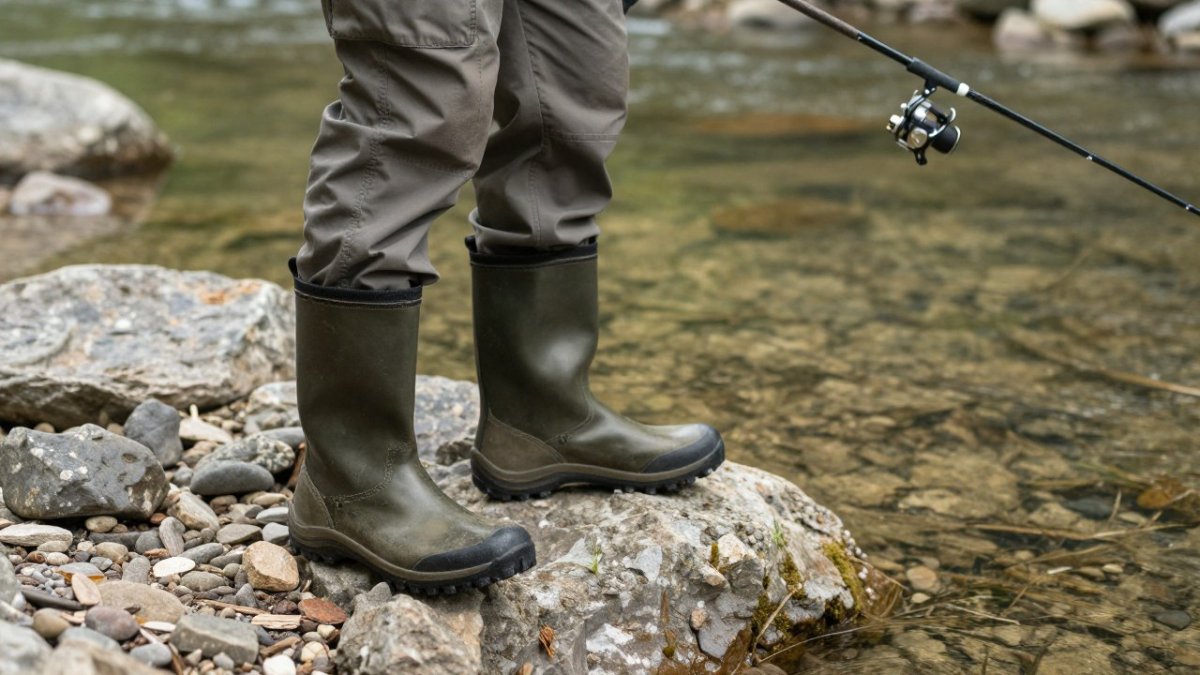
Choose wading boots for steep, rocky rivers with heavy current and long hikes to the water, and choose wet-wading shoes for flatter, gravel-bottomed streams where you walk a lot in shallow water. That's the short answer. Anglers on Alberta's mountain rivers often pick the wrong footwear, and the rocks are usually the reason.
Wading boots and wading shoes are both designed for fly fishing in moving water, but they solve different problems. Boots cover more of the ankle, offer more protection from debris and impacts, and usually carry more aggressive sole systems. Shoes are lighter, drain faster and feel more natural on the foot. Neither is better in every case, and the right choice depends on the riverbed you are standing on.
Watch out: a shoe that feels comfortable in the parking lot can feel unstable once you are twenty metres out on a moving cobble bar, so test your footwear on the terrain you actually plan to fish.
How Rocky Riverbeds Change What Your Footwear Must Do
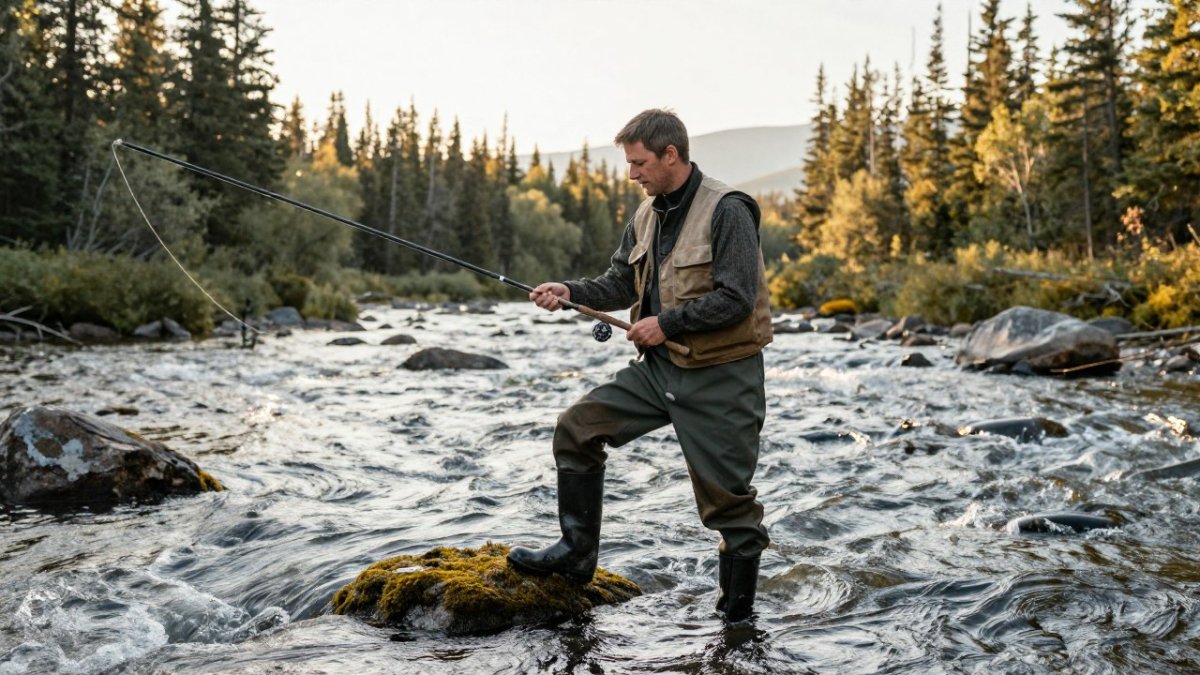
Rocky riverbeds ask more of your footwear than almost any other fishing environment. Cobbles roll underfoot, boulders hide slick algae, and a sudden drop can turn a calm step into a stumble. The footwear you choose has to hold your foot steady, grip wet stone and protect your toes and ankles when you misjudge a step.
Current adds another layer of difficulty. Moving water pushes against your legs, and every step has to be placed deliberately. Anglers often underestimate how much stability matters until they lose their footing in knee-deep water with a rod in hand.
Route matters too. If you hike to the river, walk along rocky banks or scramble over boulders, you need footwear that handles distance as well as water. A pair that works well for standing in a single pool may be tiring and awkward on a long approach.
Wading Boots: Ankle Support, Protection and Trade-Offs
Wading boots give you more coverage over the ankle, which helps on uneven footing and protects against rocks, debris and the occasional impact against a submerged boulder. Many models pair a boot upper with a felt or rubber sole designed for grip. Boots also suit anglers who plan to hike, since the extra structure helps on rough ground.
The trade-off is weight and drying time. Boots are heavier and stay wetter longer, which can make a long day less comfortable. They can also feel restrictive for anglers who want freedom of movement in the ankle.
Best Wet Wading Shoes for Fly Fishing on Rocky Water
Wet-wading shoes trade some protection for lightness and quicker drying. They suit anglers who spend most of their time in shallow water, walk short distances to the river and value a natural feel underfoot. Many people also prefer shoes in warm weather, when a heavy boot can feel like too much.
Check the sole design and fit of any wet-wading shoe before you commit.
Shoes are a sensible choice when your water is gravelly or sandy rather than boulder-strewn, but they give less ankle support when you need it most.
Wading Boot Traction on Slippery Rocks: Felt vs Rubber Soles
Sole choice is the single biggest traction variable on rocky rivers, and the felt-versus-rubber debate is more nuanced than most anglers assume. Felt soles excel on slick, algae-covered bedrock and smooth submerged stone because the fibrous surface conforms to micro-texture and sheds water film. Rubber soles, including Vibram-style compounds found on many modern wading shoes and boots, grip well on dry rock, gravel, and mixed cobble but can skate on wet, polished bedrock unless the tread pattern is aggressive and the compound is soft.
The trade-off extends beyond grip. Check local rules before buying, because restrictions on felt soles vary by province and waterbody.
Tread pattern and sole stiffness matter as much as material. A sticky rubber compound with deep, angled lugs bites loose cobble and gravel; a flatter, harder sole is more predictable on smooth bedrock but less forgiving on round stones. Softer soles conform to irregular rock but wear faster; stiffer soles protect the foot and support edging on steep banks but transmit more shock.
Studs and traction enhancements change the equation. Carbide or aluminum studs screwed into rubber soles add bite on wet rock, mossy boulders, and steep banks, and many anglers consider them essential on technical rivers. Studs do not help on bare bedrock where there is nothing to bite, and they can be slippery on hard, smooth surfaces, so match the setup to the riverbed. Replace worn studs before they round off, and check insert threads for corrosion after salt or silt exposure.
A common pattern among experienced anglers is to run rubber soles with studs as the default for mixed rocky rivers, keep a felt pair for specific slick-bedrock waters where legal, and inspect both after every trip. Lock your heel before shifting weight, test each step before trusting it, and remember that no sole compensates for rushing across a wet boulder.
Watch out: felt soles can become dangerously slick after they dry and then rewet on certain surfaces, and worn studs or packed silt reduce grip on any sole, so clean and inspect your soles through the season.
The table below summarises how each sole type performs on the kinds of rock covered above.
| Sole type | Best for | Key difference |
|---|---|---|
| Felt | Slick, algae-covered bedrock | Fibrous surface conforms to micro-texture and sheds water film |
| Rubber | Dry rock, gravel and mixed cobble | Grips well, but can skate on wet, polished bedrock |
| Rubber with studs | Wet rock, mossy boulders and steep banks | Carbide or aluminum studs add bite; no help on bare bedrock |
| Felt (where legal) | Specific slick-bedrock waters | Check local rules, as restrictions vary by province and waterbody |
Fit, Socks and Drying Time: Neoprene Socks for Wet Wading
Fit is where most wading footwear decisions succeed or fail, and it changes with what you wear inside the boot or shoe. A common pattern is to size up half to a full size when pairing footwear with neoprene socks or thick wading socks, because the added material takes up volume and a snug dry fit becomes a pinch point once the sock is wet. Wader booties add another layer: if you wear stockingfoot waders, the bootie plus a wading sock can push you up a full size compared with a bare-foot try-on. Always test footwear with the exact sock and bootie combination you plan to use, and try it late in the day when feet have swollen.
Heel lift is the fit fault to watch for. If your heel rises when you walk, you will get blisters and lose stability on uneven rock, and no sock thickness fixes a boot that is too long. Insoles can take up volume in a slightly roomy boot, but they also change arch support and can make a tight boot tighter. Remove the stock insole when trying on with thick socks to see how much room you actually have.
Drying time separates shoes from boots in practice. Remove insoles, loosen laces, open the tongue, and dry footwear in shade rather than direct sun, which can degrade rubber and adhesives. Never dry near a hot stove or campfire.
Durability and lifecycle cost deserve a place in the fit conversation. Sole wear is the first failure point on rocky rivers, especially with studs and abrasive cobble; seams and lace loops fail next, and laces are cheap to replace but hard to source on short notice. Cleaning footwear between watersheds, rinsing silt from felt and mesh, and inspecting studs and seams after each trip extends life and protects access. Weigh purchase price against how many seasons the sole and upper will realistically last on the rock you fish.
Watch out: a boot that fits bare-foot will likely be too tight with neoprene socks and wader booties, and drying footwear in direct sun or near heat can warp soles and crack adhesives.
Choosing Your Rocky-River Footwear at River People Guides
For steep, rocky rivers with heavy current, long walks and frequent boulder scrambling, a wading boot usually gives more stability and protection. For flatter, shallower water where you value speed and light weight, a wet-wading shoe often makes more sense. Many anglers end up owning both.
Start with your river. Consider the bottom, the current strength, the distance you hike and the temperature you fish in. Then choose the sole material and fit that suit those conditions. If you are unsure, ask a guide or shop staff who knows your local rivers.
At River People Guides, we give advice based on real conditions on the water. Once you have picked your footwear, book a guided river trip to put it to work on the water with an experienced guide.
Browse our full range of Orvis wading boots to compare options, or see the Orvis Pro rubber wading boot if you want a closer look at a specific model. If your current boots show wear, the Orvis wading boot lace replacement can extend their life. For a broader look at wet-wading gear, read our guide to the best fly fishing waders for 2026.
Frequently Asked Questions
Are wading boots or wading shoes better for rocky rivers?
For most rocky rivers, wading boots give more ankle support and protection from sharp rocks, which matters when footing is uneven. Wading shoes are lighter, dry faster and feel more flexible, so they suit anglers covering short distances on smoother gravel. The right choice depends on how rough the riverbed is, how far you walk and how much support your ankles need on slick stones.
Do wading shoes provide enough ankle support on uneven riverbeds?
Wet-wading shoes are low-cut, so they offer limited ankle support compared with boots. On uneven boulder fields, a shoe can let your ankle roll more easily. If you regularly cross large rocks or fast current, a boot with a higher collar and stiffer shank will give you more stability. Many anglers who choose shoes add a lightweight wading staff for balance.
Which wading footwear has better traction on slippery rocks?
Traction depends more on the sole compound and tread than on whether the footwear is a boot or a shoe. Felt soles grip algae-covered stones well but are restricted in some waters, and rubber soles such as Vibram Idrogrip are common on wet-wading shoes and perform well on many rocky banks. Check local fishing regulations before choosing felt, and test grip on a rock before committing to a purchase.
Can you wear wading boots without waders?
Yes. Many anglers wear wading boots in warm weather with no waders, using a wet-wading setup. Pair them with quick-drying synthetic socks or neoprene socks to protect your feet and add some warmth. Boots are heavier than shoes, so expect more weight on your feet when you hike between pools.